


OK, by popular demand, we’re going to continue the Hall of Fame Special that we started a couple of weeks ago. As a reminder, this only includes post-World War II players (we’ll get to pre-World War II candidates at some point), and we’re using Career Win Shares as our featured statistic, just to give you a different look from the WAR numbers you normally see.
I’ll start each category with the list from last time, and then add below.
Retired players who I believe will be elected
Albert Pujols (508 WS)
Ichiro Suzuki (323 WS)
Adrian Beltré (373 WS)
Todd Helton (318 WS)
Billy Wagner (182 WS)
CC Sabathia (242 WS)
Andruw Jones (276 WS)
There are three retired players I mistakenly left off this list:
New No. 3: Miguel Cabrera (429 WS): I guess it’s hard for me to accept that Miggy is retired now. Just a hitting force. Four-time batting champion. Winner of the 2012 Triple Crown. Hit the ball as HARD as anyone I’ve ever seen.
New No. 9: Buster Posey (243 WS): I overlooked a couple of catchers because of their relatively low Win Shares/WAR totals. But Posey, in my view, is certainly going to the Hall of Fame. He was the best player and the leader of a three-time World Series champion. Yes, he played in only 1,371 games and managed just 1,500 hits, but his impact was immense, he was a fantastic hitter and a Gold Glove catcher, and in my view, he’s in.
New No. 10: Yadier Molina (301 WS): Posey has the higher WAR, Molina has more Win Shares, Posey was the better hitter (by far), Molina was the better defensive catcher (up there with the best ever), Posey’s career was short, Molina’s was incredibly long, you can go back and forth on the two. I think they’re both in.

Happy Friday! Our Friday posts are free so everyone can enjoy them. Just a reminder that Joe Blogs is a reader-supported newsletter, and I’d love and appreciate your support.

Retired players who I think have a shot at election
Joe Mauer (306 WS): Comparing him with Posey and Molina, I think maybe he has more than a shot.
Chase Utley (291 WS)
Jimmy Rollins (303 WS)
I’m going to add one more, just for kicks, even though I don’t THINK he has much of a shot, based on his early lack of support, but…
New No. 4: Bobby Abreu (356 WS): Bill James, who tends to stay out of Hall of Fame arguments, has been pretty adamant that Abreu was a great player. And he’s right. You’re talking about a guy who through age 33 was a .300/.400/.500 guy. And on top of that, he led the league in doubles once, in triples once, he would steal you 30 bases a year, he pretty much always scored 100 runs and usually drove in 100 runs. He’s a statistical peculiarity, so you can have all sorts of fun with him:
Number of players in modern baseball history who hit .300 with 100 walks, 100 runs, 45 doubles and 30 stolen bases:
Bobby Abreu, 2002
Bobby Abreu, 2004
Or how about this: Number of players in modern baseball history with 100 walks, 35 doubles, 10 triples, 20 homers and 25 stolen bases:
Bobby Abreu, 1999
Bobby Abreu, 2000
Or this convoluted one: Number of players in modern baseball history with 100 walks, 100 runs, 100 RBIs, 165 hits, 36 doubles, 30 homers and 30 stolen bases.
Bobby Abreu, 2001
Bobby Abreu, 2004
Bobby Abreu, 2005
I had to do a little extra work on the last one — using 36 doubles as a filter — but I did that so I could get every one of Abreu’s years from 2000 through 2005. Each of those six years was a numerical potpourri. I’ve been lax in my support of Abreu because I found him so boring as a player — I nicknamed him the MBGPE (Most Boring Great Player Ever) — but if our job here is to identify underappreciated great players, Abreu should be right at the top. He has gotten so little Hall of Fame support while other sabermetric darlings like Todd Helton (318 WS) and Scott Rolen (304 WS) and Larry Walker (308 WS) and Andruw Jones (276 WS) have flown up the Hall of Fame charts.
There’s an argument to be made that Abreu was the best of them all. I’m not sure I want to be the one to MAKE that argument, but I am coming around to the idea that we need to be looking a lot more closely at Bobby Abreu.

Hey, if you feel like it, I’d love if you’d share this post with your friends!

Players not in the Hall because of steroid suspicions
Barry Bonds (702 WS)
Roger Clemens (437 WS)
Alex Rodriguez (491 WS)
Manny Ramirez (409 WS)
Mark McGwire (342 WS)
Gary Sheffield (430 WS) — I don’t THINK he had enough support his last time on the ballot to jump from 55% last year to election this year, but you never know.
Rafael Palmeiro (394 WS)
Sammy Sosa (321 WS)
Kevin Brown (242 WS)
Juan Gonzalez (233 WS)
I thought of someone to add here:
New No. 9: Robinson Canó (349 WS): He became such a non-factor late in his career that it’s easy to forget both how great a player he was in his prime (truly one of the great second basemen ever from 2006 through ’16) and how beloved he was (he was so devoted to the Hackensack University Medical Center that they named the Occupational Therapy Suite after him). But he failed two separate drug tests and then he badly fell off in his late 30s. I imagine the Hall of Fame voters will not be generous, though I guess we don’t know what the voting will be like in 2028.
Players not in the Hall for various non-baseball reasons
Pete Rose (549 WS)
Carlos Beltran (369 WS)
Shoeless Joe Jackson (294 WS)
Curt Schilling (252 WS)
I included Shoeless Joe Jackson here even as a pre-World War II player because he’s a decidedly MODERN character thanks to W.P. Kinsella and the movie “Field of Dreams.” I emphasized this point by saying how many people have come up to me to complain about Shoeless Joe being absent from The Baseball 100 even though, obviously, none of them actually saw Shoeless Joe play. I’m told that Brilliant Reader Tom took offense to this, thinking that I was saying that because people didn’t see someone play, they’re not allowed to have an opinion about him. This couldn’t be further from what I meant, but when a BR takes away the wrong message, I blame myself for not being clear enough. I was only saying that to point out how many people still CARE about Shoeless Joe, which makes him a modern player, as far as I’m concerned.
Let me add one more here:
New No. 5: Omar Vizquel (282 WS): I forgot about him because, honestly, I was never overly taken by Vizquel’s Hall of Fame case. He was a wonderful defensive shortstop, certainly, but so was Dave Concepcion and so was Bert Campaneris, and you could argue that both were better hitters than Vizquel. And as for pure defense, people wanted to put Omar up there with Ozzie and Aparicio, but I’m not sure about that, I’d rank Mark Belanger ahead of him, and also maybe the spectacularly underrated defender Rey Sanchez, not to mention more modern guys like Andrelton Simmons. So, to me, Vizquel was a perfectly fine candidate, I liked watching him play a lot. Anyway, looking at it objectively, Omar was totally headed for the Hall of Fame, even with my reservations … and then a bunch of bad stuff came out about him, and he lost his Hall of Fame ticket.
Best remaining players not in the Hall
Lou Whitaker (352 WS)
Dwight Evans (347 WS)
Dick Allen (352 WS)
Luis Tiant (256 WS)
Tommy John (289 WS)
Bobby Grich (329 WS)
Graig Nettles (321 WS)
Dale Murphy (294 WS)
Dave Parker (321 WS)
Darrell Evans (363 WS)
Here’s where I asked if you want me to keep going … and the vast majority of you said yes, because you don’t want to let me write my football book. You asked me to go to Will Clark, so here we go, and I might even throw in some bonus players after.
No. 11: Bernie Williams (312 WS): There is an enduring theory — a complaint really — that Yankees get preferential treatment when it comes to awards and the Hall of Fame. Even as a charter member of the YLC (Yankee Loather Club), I know that this is actually nonsense. As for the awards, well, one fact puts it in perspective: Derek Jeter never won an MVP award. He got beat out, absurdly, by:
1998: Texas’ Juan Gonzalez
1999: Texas’ Ivan Rodriguez
2000: Oakland’s Jason Giambi
2001: Seattle’s Ichiro Suzuki
2006: Minnesota’s Justin Morneau
2009: Minnesota’s Joe Mauer
I’m not saying that Jeter deserved to win the award all these years. I’m just saying he put up MVP-type numbers in those six seasons, and look at the people who beat him out. Then, consider that Mariano Rivera never won a Cy Young Award.
There’s no Yankees award bias.
As for the Hall of Fame, well, Bernie Williams is a good example of a pretty great Yankees player who received almost no Hall of Fame support. Again, support for our favorite sabermetric players, like Scott Rolen, skyrocketed … but taking a step back, was Scott Rolen really a better player than Bernie Williams? Sure, he was a spectacular defensive player, while Williams’ defense, despite his four Gold Gloves, doesn’t look too great in retrospective, and he was a sleeper sofa in his final few years.
But Bernie Williams was a great hitter, a much better hitter than Rolen in his prime. From 1995 to 2002, Williams hit .321/.406/.531 with a 142 OPS+. That’s over eight seasons, during which the Yankees won four World Series and a pennant. Rolen, in his career, had only one season with a 142 OPS+. Williams also hit 22 postseason home runs.
Look, I’m as apt to fall into the statistical hole as anybody, and I imagine I’ve done as much as anyone to promote the merits of WAR and its holistic view of ballplayers … but if you take a step back from WAR (which just SAVAGES Williams for his defense), is Scott Rolen REALLY a better Hall of Fame candidate than Bernie Williams? I dunno, man.
No. 12: Reggie Smith (325 WS): I was curious, how many times did Reggie Smith have a higher bWAR than the league MVP? Well …
1970: Boog Powell won the MVP with 5.1 WAR. Reggie Smith had 6.7 and finished 26th.
1974: Jeff Burroughs won the MVP with 3.6 WAR. Reggie Smith had 5.5 and finished 11th.
That’s actually it … I thought it might have been one or two more times. Reggie Smith didn’t deserve to win the award in either of those years, by the way — it should have Yaz in ’70 and maybe Carew in ’74 — but my point is Smith put up quite a few good years for good teams, and if the breaks had fallen right, he might have taken an MVP Award. I wonder if that would have made a difference in the Hall of Fame voting.
No. 13: Keith Hernandez (311 WS): Maybe winning an MVP wouldn’t have made any difference at all for Reggie Smith — Keith Hernandez won one and still got stunningly little Hall of Fame support. With Keith, I wonder if playing those final two seasons for the Mets and Cleveland cost him some support. Going into the 1989 season, he was a lifetime .300 hitter with 2,100 hits, and he had the MVP and those 11 Gold Gloves, etc. In those last two seasons, his batting average dropped to .296. That shouldn’t matter at all, but I suspect it does.
I think the other thing that has held Hernandez back as a Hall of Fame candidate is that he wasn’t a prototypical first baseman — he didn’t hit home runs and he drove in 100 runs only once. He was, instead, a defensive force (the best defensive first baseman ever, I’d say) who hit for a high average, banged lots of doubles, scored lots of runs and walked a bunch. I wonder if, in today’s game, Hernandez would be a leadoff hitter.*
*In his actual career, Hernandez NEVER started a game as a leadoff hitter and incredibly hit second in the lineup only four times, even though he was a prototypical No. 2 hitter.
You know what else might have held Hernandez back? This is a weird thing to say but … being born left-handed. I’ll bet if Hernandez had been right-handed, he would have been a DYNAMITE shortstop, and at shortstop, with his offensive prowess, he would have been a Hall of Famer years ago. We don’t think much about it, but Hernandez being born left-handed limited him to defensive positions where it’s very, very, very difficult to get into the Hall of Fame without swatting lots of home runs.
No. 14: Al Oliver (305 WS): If you listen to MLB Radio’s “Remember When,” you know that host Ed Randall ends shows by saying that Al Oliver should be in the Hall of Fame.
How many people with a lifetime .300 batting average and more than 2,700 hits are not in the Hall of Fame? There are four:
Ichiro Suzuki. He’ll be elected first-ballot, maybe unanimously.
Miguel Cabrera. He’ll be elected first-ballot, maybe unanimously.
Pete Rose. He would have been elected first-ballot, maybe unanimously, if he hadn’t bet on baseball.
Al Oliver.
You know what’s interesting about those four? Only Oliver didn’t get 10,000 plate appearances in the big leagues. Which, yeah, if Oliver had gotten as many plate appearances as those other guys, he would have gotten 3,000 hits and he WOULD be in the Hall of Fame.
And he should have been given that chance. Oliver’s career ended after the 1985 season at age 39. It was clear that he was still a fine hitter, especially against righties. He was a fantastic weapon for the Blue Jays in the American League Championship Series; he hit .375 in the five games and twice delivered the knockout hit; he was so good that he forced Kansas City manager Dick Howser to change things up just to avoid him (Bill James writes about this at length in his epic review of that series).
Oliver became a free agent after the season … and nobody offered him a job. Many years later, it would be ruled that Oliver was a victim of owner collusion, and he was awarded $680,000 … but that didn’t give Oliver the at-bats he needed. I don’t know that he would have gotten to 3,000 hits anyway, but he certainly deserved the chance to try, and he was a truly fantastic hitter.
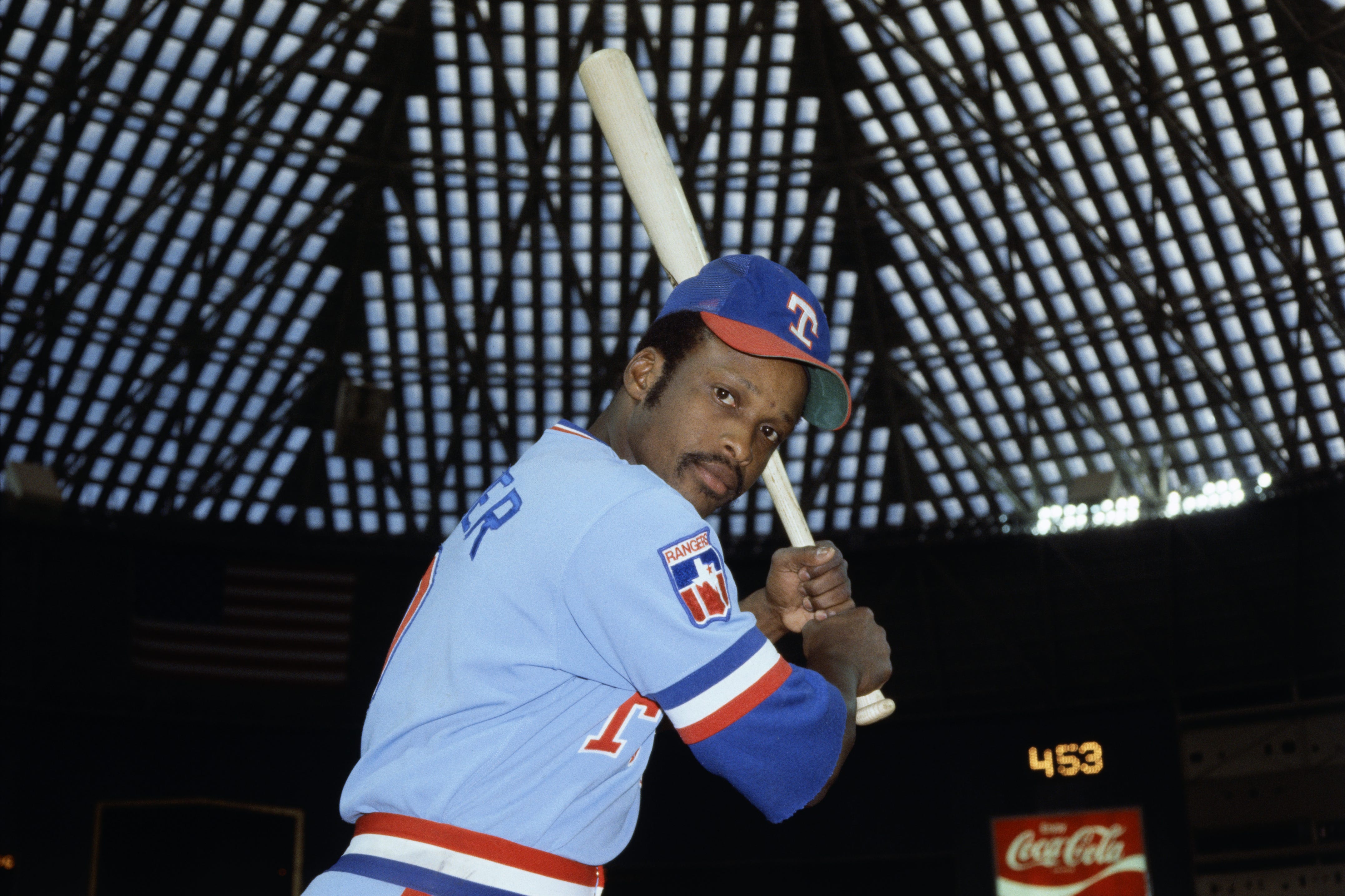
No. 15: Kenny Lofton (287 WS): He was the unluckiest Hall of Fame soul, in that he came on the ballot with, deep breath, Barry Bonds, Roger Clemens, Sammy Sosa, Curt Schilling, Mike Piazza and Craig Biggio. On top of that, you already had Jeff Bagwell and Edgar Martinez and Tim Raines and Larry Walker, who would eventually get voted in by the BBWAA, and you had Jack Morris and Lee Smith and Alan Trammell and Fred McGriff, who would eventually get voted in by a veterans committee, and you had Rafael Palmeiro and Mark McGwire just muddying up the works. Lofton was barely considered, as suggested by the 3.2% he received. He deserves his case to be heard.
No. 16: Will Clark (331 WS): In Will Clark’s last year, 2000, he hit .310/.418/.546 with 30 doubles, 21 home runs and a 145 OPS+ in 130 games. In his last 51 games for the Cardinals, he hit .345/.426/.655 and then hit .412 in the NLCS against the Mets.
A month later, he retired.
“The biggest thing is I’ve had three elbow surgeries,” he told the press. “Between 1996 and 1999, I’ve had 36 bone chips taken out of my elbow. The doctor said, ‘You’re not getting any younger, and one of these days I’m going to have to do it again if you keep doing this.’ I’m going to need my left arm for the rest of my life.”
Reporters theorized that he retired so he could spend more time doing the thing he loved most — hunting deer.
Later, he would say that he retired so that he could spend time with his family, particularly his son Trey, who had been diagnosed with a form of autism.
There’s so much happening with people that we don’t know.
Clark’s Hall of Fame case might have appealed to more people if he’d spent his entire career with the Giants. As it was, he bounced from San Francisco to Texas to Baltimore to St. Louis, and while Will the Thrill had big fans in all of those places (Rangers’ fan Clayton Kershaw wears 22 in his honor), he didn’t have one cohesive and concentrated fan base to push his Hall of Fame case the way, say, Jim Rice did.
No. 16: Vada Pinson (312 WS): There was a time when I was collecting all the Vada Pinson cards I could find, in anticipation of his Hall of Fame election. I mean, he had almost 2,800 career hits, and, upon his retirement, was one of two players in MLB history with 250 homers and 250 stolen bases — the other being a guy named Willie Mays. Pinson led the league in runs once, hits twice, doubles twice and triples twice. He scored 100-plus runs four times and drove in 100-plus runs twice.
Truth is, after he turned 27, Pinson was a very different ballplayer. Up to that point, he was a .300 hitter with power, he was blazing fast, he won a Gold Glove, he played every single game. But after age 27, he was not the same — a .270 hitter instead of .300, not much power, he began to lose his speed, his defense became a liability. He stayed on the Hall of Fame ballot for 15 years, but never garnered more than 16% of the vote.
No. 17: Lance Berkman (313 WS): The PED Era, we all know, made eye-popping offensive numbers look plain. Lance Berkman hit .293/.406/.537 for his career with 422 doubles, 366 homers and 144 OPS+. Those are just absurd and ridiculous numbers. And yet, so what? Lots of guys put up absurd and ridiculous numbers. Berkman’s Hall of Fame candidacy was not only doomed (he got five votes), but nobody ever seems to even talk about him anymore.
You know who people still talk about? Albert Belle. There’s a powerful feeling, especially in Cleveland, that the only reason Albert Belle is not in the Hall of Fame is because of his charming personality. And yet …
Albert Belle: .295/.369/.564, 389 2B, 381 HR, 1,239 RBI, 974 R, 144 OPS+
Lance Berkman: .293/.406/.537, 422 2B, 366 HR, 1,234 RBI, 1,146 R, 144 OPS+.
Same-same.
No. 18: Carlos Delgado (303 WS): See Berkman, Lance. Eye-popping hitter whose spectacular career numbers — .280/.383/.546 with 483 home runs and more than 1,500 RBIs — just disappear from memory because of the time when he played.
No. 19: Rusty Staub (358 WS): Holy cow, look at the Win Shares total. WAR is not as impressed by Le Grande Orange — 45.8 bWAR, 47.9 fWAR — but by Win Shares, Staub is kind of a slam-dunk Hall of Famer.
He played forever, and as such he got more than 2,700 hits, 500 doubles (well, 499), almost 1,500 RBIs. But that doesn’t really explain such a high Win Shares total, especially because Staub was a subpar defender and added no speed. So what gives?
I’ll tell you one thing that gives: Staub spent almost his entire career in TERRIBLE-hitting ballparks. He spent his early years in the Astrodome, then went to Montreal, then went to Shea Stadium. Awful hitting ballparks. And he played in a terrible hitting time.
Look at the difference between Staub’s career numbers and his neutralized batting numbers, which try to place Staub in a neutral park and a neutral era.
Career: .279/.362/.431, 2,716 H, 499 2B, 47 3B, 292 HR, 1,466 RBIs, 1189 runs.
Neutral: .290/.374/.444, 2,880 H, 529 2B, 47 3B, 305 HR, 1,588 RBIs, 1,281 runs.
The second of those lines sorta, kinda, maybe looks kind of Hall of Famerish, maybe? Actually it looks suspiciously like this mystery Hall of Famer:
Mystery HOF: .289/.356/.465, 488 2B, 49 3B, 384 HR, 1,628 RBIs, 1,299 runs
Well, that mystery Hall of Famer is Harold Baines … who, no, wasn’t my first choice for the Hall of Fame, but he’s in anyway.
No. 20: Don Mattingly (263 WS): I’ve written plenty about Donnie Baseball and what an esteemed and illustrious player he was in the 1980s.
No. 21. Thurman Munson (206 WS): As long as we’re talking about Yankees …
Bill James is not a fan of Munson’s Hall of Fame case or, indeed, it seems, Munson himself. I’m sympathetic to the cause. Munson was a force of nature, a fierce leader and competitor, a good hitter, a Gold Glove-fielding catcher, an MVP (though George Brett* was probably better) and an icon of the time.
*I probably should mention that the MLB Network has a new documentary out on George Brett, and it has all your favorite baseball heroes — Reggie’s in there, Mike Schmidt, Robin Yount, Frank White and Willie Wilson for you K.C. folks, and, you know, me.
I don’t know what Munson had left at the time of his untimely death, but I do know that he wanted to play for Cleveland — he grew up in Northeast Ohio — and on the day that he died, my childhood friend Michael Fainer and I were in the backyard playing catch and talking about how many pennants the Tribe was going to win with Munson behind the plate.

JoeBlogs Week in Review
Monday: Browns Diary, Week 13: The Wrong Mindset.
Tuesday: Leyland, Piniella, the Hall of Fame and More.
Wednesday: Young LeBron in Cleveland.
Thursday: Baseball Gets Down to Business.

Re: Thurman Munson and that George Brett documentary, a small spoiler about the brawl when Brett slid hard into Graig Nettles:
“Thurman Munson comes up and he’s one of the first guys in the pile but I’ll never forget this. He’s laying on top of me, shielding me, he said, ‘George, it’s Thurman. I got you covered. Nobody is going to take any potshots at you.’ How cool was that?”
Can’t we want you to keep going AND not want you to work on your football book?
Every moment you spend writing about football is a moment you don’t spend writing about baseball and all the other way more interesting sports and your daughters and snuggies and everything else.
You are a brilliant, entertaining, deeply moving writer...and I still don’t read a word you write about football (unless it’s part if a story of your childhood or otherwise incidental to your main topic).
Since I want you to be happy and continue to prosper, sure, go write that book. But I am always going to want you to write about anything else. 🙃