


OK, came up with a little game today called “Choose the Hall of Famer.” It is, well, I’ll get to the rules in a minute, but I think you’ll like it.
First: Thanks so much to those of you who have already preordered WHY WE LOVE FOOTBALL before the book is even officially finished! Just incredible. It occurs to me that sort of trust should be rewarded. So here’s what I’m doing: Anybody who preorders the book from the good folks at Quail Ridge before Monday (when I will send it to the publisher) can get a special note from me, along with a super-special first look at the book, which I honestly believe is some of the best and most fun storytelling I’ve done. All you have to do is gmail me the receipt at jp at joeposnanski.
Once again: You can preorder from Quail Ridge here and have me sign it and inscribe it any way you like.

I mentioned yesterday the super-fun PosCast Mike and I did with Dodgers manager Dave Roberts. It’s up now, and it’s the most fun Mike and I have ever had in the 43 pretty fun years we have been doing the PosCast. Not to spoil anything, but Dave breaks some pretty shocking news about Mookie Betts.

OK, time for the Hall of Fame. Here’s how it works: I’m going to give you pairs of players and various specially chosen details about them. And then my question will be: Choose the Hall of Famer. Now, you should know that I won’t exactly play fair, but I don’t think the game would be fun if I did play fair. OK? Let’s give it a shot. I’ll list the two players and ask you to choose which one is the Hall of Famer. And then later on, I’ll reveal the deal.
I’m sure you’ll figure some of these out… and those you don’t you will still smell the rat. But that’s cool.
Let’s start with two pitchers:
Pitcher 1: Faced 3,600 batters. Went 47-40 with a 2.31 ERA and 2.73 FIP. Struck out 1,196. Walked 300. Pitched in seven All-Star games. Got .0.05 MVP share.
Pitcher 2: Faced 3,592 batters. Went 55-38 with a 2.48 ERA and 2.56 FIP. Struck out 1,200. Walked 202. Pitched in three All-Star games. Won two Cy Youngs. Got 0.44 MVP share.

Now, let’s look at two quarterbacks:
Quarterback 1: 1,943 for 3,701 for 25,882 yards. Threw 163 touchdowns and 198 interceptions. Team record: 72-72. Career quarterback rating of 67.5. Won two Super Bowls.
Quarterback 2: 1,886 for 3,762 for 27,663 yards. Threw 173 touchdowns and 220 interceptions. Team record: 62-63. Career quarterback rating of 65.5. Won one Super Bowl.

Let’s try two more pitchers here:
Pitcher A: 194-126, 121 ERA+, 3.57 FIP. Five All-Star appearances. Won a Cy Young and finished top five three other times. Led leagues in wins, innings, strikeouts and FIP at various times in his career. Pitched well in World Series.
Pitcher B: 224-166, 104 ERA+, 3.66 FIP. Eight All-Star appearances. Won a Cy Young and finished top five three other times. Led league in wins, ERA, innings and WHIP at various times in his career. Pitched well in World Series.

Happy Friday! Our Friday posts are free so everyone can enjoy them. Just a reminder that Joe Blogs is a reader-supported newsletter, and I’d love and appreciate your support.

Now let’s look at two receivers:
Receiver 1: 750 catches, 12,146 yards, 65 touchdowns, three Pro Bowls.
Receiver 2: 851 catches, 12,785 yards, 84 touchdowns, five Pro Bowls.

Finally, let’s look at a couple of teammates!
Teammate 1: .284/.376/.527, 1,939 hits, 393 home runs, 1,251 runs, 1,199 RBI, eight Gold Gloves, 0.90 MVP share.
Teammate 2: .281/.364/.490, 2,077 hits, 316 home runs, 1,211 runs, 1,287 RBI, eight Gold Gloves, 0.57 MVP share.

Hey, if you feel like it, I’d love if you’d share this post with your friends!

Oh, wait, I just thought of one more: Let’s look at two running backs:
Running back 1: 1,655 carries, 7,607 yards, 60 touchdowns, led league in rushing and touchdowns. Twice named offensive player of the year.
Running back 2: 1,780 carries, 8,172 yards, 86 touchdowns, led league in rushing and touchdowns. Twice led the league in yards from scrimmage. Once named offensive player of the year.

OK, I hope that was fun. If you saw through some or all six of them, hey, that’s awesome. I wasn’t trying to be TOO tricky… but just tricky enough, because I hope that there’s a point to be made about each one.
Challenge 1: A battle of pitchers!
Pitcher 1: Billy Wagner
Pitcher 2: Jacob deGrom’s last 146 starts.
OK, neither one is officially a Hall of Famer, but Wagner gets elected next year.
This was actually a Tom Tango challenge. What Tom always tries to do is get us thinking about our own thinking. By leaving saves out of the equation, you can see that deGrom has been just as good, probably even better than Wagner just over his last eight injury- and pandemic-plagued seasons.
And we’re back to asking what we think about relievers. I know that some of you—I know this because I’ve heard from some of you—honestly believe that pitching in the ninth inning is just quantifiably different from pitching in other innings. I suppose that’s what it comes down to, right?
A great closer will get to pitch, what, 10 to 15 innings in a month? In June 2005, Wagner pitched 13 innings.
A great starter will pitch, maybe, 30 to 45 innings in a month. In June 2018, deGrom pitched 42 innings.
Obviously, those numbers will vary, but that seems a decent range.
Pretty much all of those great closer innings will be the ninth.
And these days, pretty much none of those great starter innings will be the ninth.
So, are we to say those great closer innings are worth two to three times more than those great starter innings?
I’m not asking for the mathematical answer; Tango can give us that. I’m asking for the instinctive answer. If a closer throws 10 to 15 innings, he will pitch in 10 to 15 games. They probably won’t all be important situations, but he’ll probably come into a handful of close games at least.
And the starter will pitch in, what, five or six games, but he will probably be the key factor in all of those games.
Which role is more important to your team’s success? Which role is harder? If you had a pitcher who could excel in either role, would you make that pitcher a starter or a closer? For me, it’s becoming more and more clear. I love Billy Wagner. I’d rather have Jacob deGrom, even with all the injuries.
Challenge 2: A battle of quarterbacks!
Quarterback 1: Jim Plunkett
Quarterback 2: Joe Namath
Football is very much not a game of statistics, something I have come across dozens of times while writing WHY WE LOVE FOOTBALL. Even so, Joe Namath’s passing numbers are just shocking. Even considering the time when he played, he was an interception machine—led the league in interceptions four times—and he completed just 50 percent of his passes over his career.
This is not to say that Joe Namath doesn’t belong in the Hall of Fame. OF COURSE he belongs in the Hall of Fame. He’s an inner-circle member of the Hall of Fame because his persona, bravado, breathtaking arm, magnificent deep ball and Super Bowl guarantee helped CREATE professional football as we know it. He’s a seminal figure in the game.
Jim Plunkett is not. But it’s super-hard to look at Plunkett’s career and not think: “Huh, when you take it all into consideration, he was probably at least as good a quarterback as Namath.”
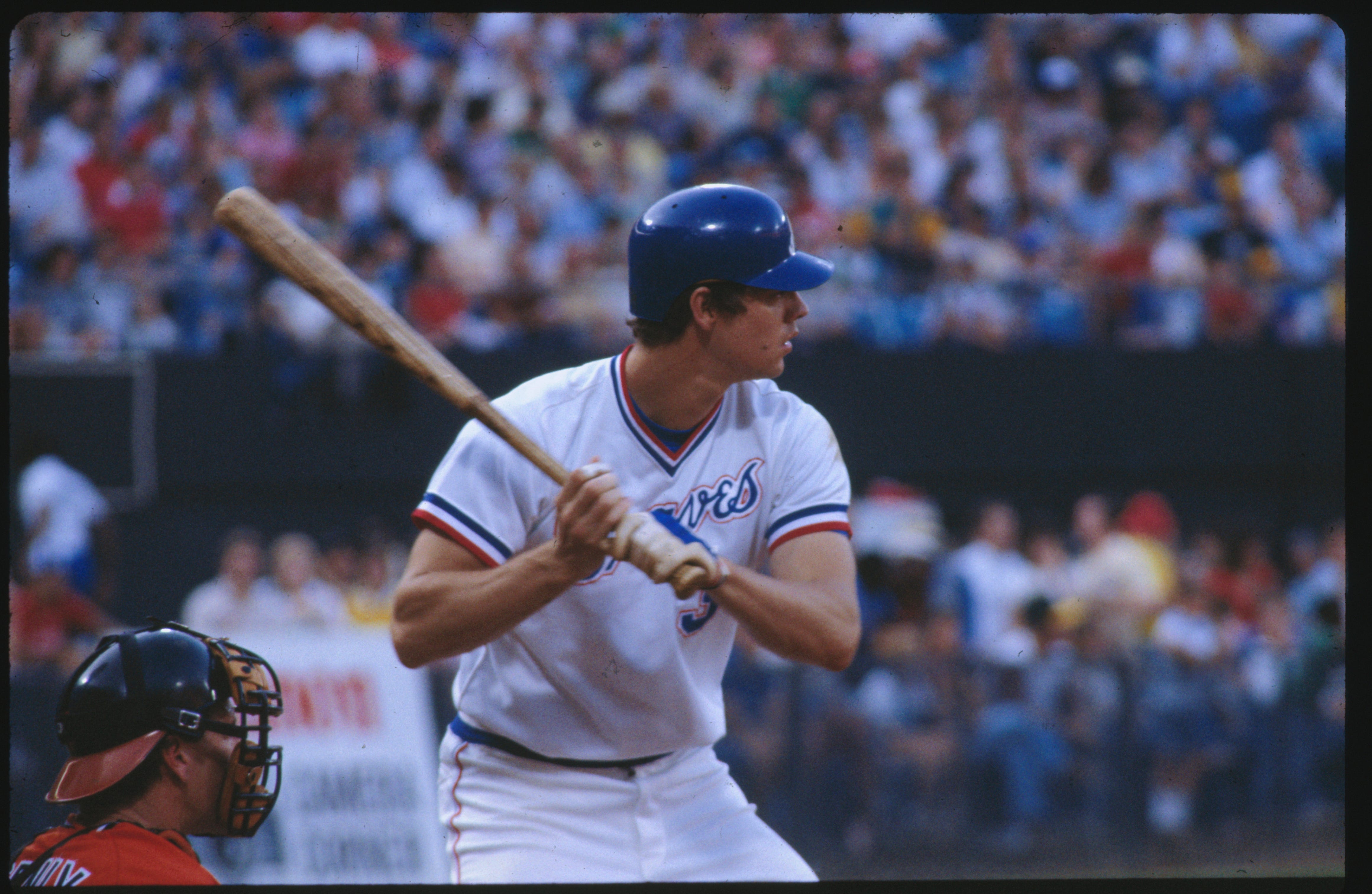
That’s what we do in baseball. We take it all into consideration. It seems to me that Dale Murphy was a seminal figure in the game, a two-time MVP, the most popular player in baseball, a hero in the South forever. But the career didn’t last long enough, and he’s not in the Hall of Fame, while dozens and dozens and dozens of players who didn’t have nearly the impact on the game that he had are in the Hall of Fame because they, like Jim Plunkett, were able to piece together statistically more complete careers.
I’m not saying they do it right in football. I don’t think people care nearly as much about the Pro Football Hall of Fame as they do the Baseball Hall. But I do think they’re better in football about honoring titans and legends and players whose careers, while perhaps short, were utterly impactful.
Challenge 3: Another battle of pitchers!
Pitcher A: David Cone
Pitcher B: Catfish Hunter
You can always have fun comparing pitchers to Catfish Hunter because of that cringy 104 ERA+. But, look, Hunter was a man of his time. In his time, the big thing for a pitcher to do was win 20 games, and he did it five years in a row. We don’t care so much about pitcher wins now, and 20-game winners are nearing extinction*, but, boy, did we care then.
*It’s kind of fascinating to think: Since 2020, three pitchers have won 20 games. None of them—not Julio Urias, nor Kyle Wright, nor Spencer Strider—won the Cy Young award.
The comparison I think of is not another pitcher, but Steve Garvey. In his time, a big thing for a hitter to do was get 200 hits in a season. That’s not really something we look at much now, but Garvey was obsessed by it, and he got 200 hits in a season six times in seven seasons between 1974 and ’80. And you know what? That achievement, along with his general Steve Garveyness, probably would have gotten him into the Hall of Fame just like Hunter if he had not had all the embarrassing off-the-field issues.
Anyway, Cone was a better pitcher than Hunter. I feel pretty confident in saying that. I mean, there’s a chance, I suppose, that his TWENTY-FIVE WIN advantage in WAR is an illusion or a statistical blind spot or miscalculation. But I doubt it. Anyway, Cone was simply more dominant in a much harder-hitting time.
Challenge 4: A battle of receivers!
Receiver 1: Charlie Joiner
Receiver 2: Irving Fryar
It occurs to me that many of you, even seeing the two names, will not know which one is the Hall of Famer. Like I say, most just don’t care nearly as much about the Pro Football Hall of Fame.
It’s Charlie Joiner who is in the Hall.
Irving Fryar, best I can tell, has never even been considered for the Hall.
I put this one in to show just how much things can change over time. When Joiner retired, he was the all-time leader in pass receptions. That’s why he’s in the Hall of Fame. Since he retired, the passing game in the NFL has exploded and then exploded again then exploded again, and he’s now 46th and falling in career receptions.
This is an extreme example because football is an extreme game. But this is happening in baseball, too. The game is changing pretty dramatically, and we’re not necessarily adjusting our thinking in real time.
The funny thing about baseball is that it’s going THE OTHER WAY, particularly for pitchers. Unless Justin Verlander can keep on going for four more years, or the game changes again, we’re simply never getting another 300-game winner.* I’m not sure after the Verlander-Greinke-Scherzer-Kershaw wave that we’ll get too many 200-game winners.
*I do realize it has been said many times through baseball history that the 300-game winner is dead, and then it happens, but I do think the fact that there have been three 20-game winners in this decade and they are three different pitchers tells you that this time, the hype is real.
Challenge 5: A battle of teammates!
Teammate 1: Jim Edmonds
Teammate 2: Scott Rolen
I imagine at least one of you (and probably many of you) nailed this one, because I think I got this one from a Brilliant Reader.
In many ways, I think this is the most pointed of all challenges, because Edmonds was simply a better hitter than Rolen. I just think that’s more or less indisputable. They played at the same time, often on the same team, and Edmonds had a higher batting average, a higher on-base percentage and a higher slugging percentage. They each had their best offensive seasons for the 2004 Cardinals and…
Rolen: .314/.409/.598 with 109 runs, 34 homers, 124 RBIs, 158 OPS+
Edmonds: .301/.418/.643 with 102 runs, 32 homers, 111 RBIs, 171 OPS+
Edmonds also won as many Gold Gloves and had at least as sparkling a defensive reputation as Rolen did; I mean, Edmonds made one or two of the greatest catches in baseball history.
So why is Rolen in the Hall of Fame while Edmonds fell off the ballot in his first year?
Well, one, timing had something to do with it. Edmonds’ one year on the ballot was 2016, the year Ken Griffey Jr. came on. Edmonds obviously couldn’t compare with Junior, and the ballot was still stacked beyond imagination, with NINE future Hall of Famers, plus a Barry and Roger and Sammy and Curt and so on. Edmonds could manage only 11 votes in that mess.
When Rolen came on the ballot two years later, he came on with Chipper Jones and Jim Thome, so, no, he couldn’t really compare with them. And the ballot was still kind of a mishmash, but things were clearing, and Rolen was able to get 10% of the vote and stay on the ballot until Bonds and Clemens and all those guys were off. Then he got elected.
The second reason is probably the bigger one:
Scott Rolen bWAR: 70.1
Jim Edmonds bWAR: 60.4
And why is Scott Rolen’s WAR that much higher? Because defensively—putting together his defensive value plus his positional value—he finished 146 runs ahead (or roughly 14 wins) ahead of Edmonds. Was he 14 wins better than Edmonds defensively? The voters have spoken, and they say yes.
Challenge 6: A battle of running backs!
Running back 1: Terrell Davis
Running back 2: Priest Holmes
I was going to stop at five challenges, but then I realized there was no way I could leave off my favorite football player and chess buddy.
Terrell Davis was absolutely fantastic for three seasons. Priest Holmes was otherworldly for three and a half seasons. I love, love, love looking at their primes statistically:
Terrell Davis: 47 games, 1,106 carries, 5,296 yards, 103 receptions, 814 yards, 49 rushing touchdowns, 53 total touchdowns, 11 fumbles.
Priest Holmes: 46 games, 960 carries, 4,590 yards, 206 receptions, 1,976 yards, 56 rushing touchdowns, 61 total touchdowns, 6 fumbles.
Davis is in the Hall of Fame because the Broncos won two Super Bowls in those three seasons. Holmes is not in the Hall of Fame because the Chiefs’ defense was awful and they lost the only playoff game they appeared in, a home game to Indianapolis when neither team punted. Football is like that.

JoeBlogs Week in Review
Monday: The preorder campaign for WHY WE LOVE FOOTBALL is live!
Monday: A few Championship Game thoughts.
Thursday: A Joe-Pourri!

It's not just that the Broncos won two Super Bowls with Davis. It's that Davis is probably the best playoff RB ever.
In 8 playoff games, Davis had 1140 yards and 12 TD.
If you convert that to a 16-game season, Davis would have 2,280 yards and 24 TD on 408 attempts. An average of 142 yards/game and 5.6 yards/attempt.
Closer innings are highly overrated, These days it's almost always 1 inning with a clean slate.
It is always with a lead.
There may be some pinch hitting, but it's not always the heart of the line up nor against the most dangerous hitters. The hitter hasn't seen the pitcher yet to get an idea of his stuff.