

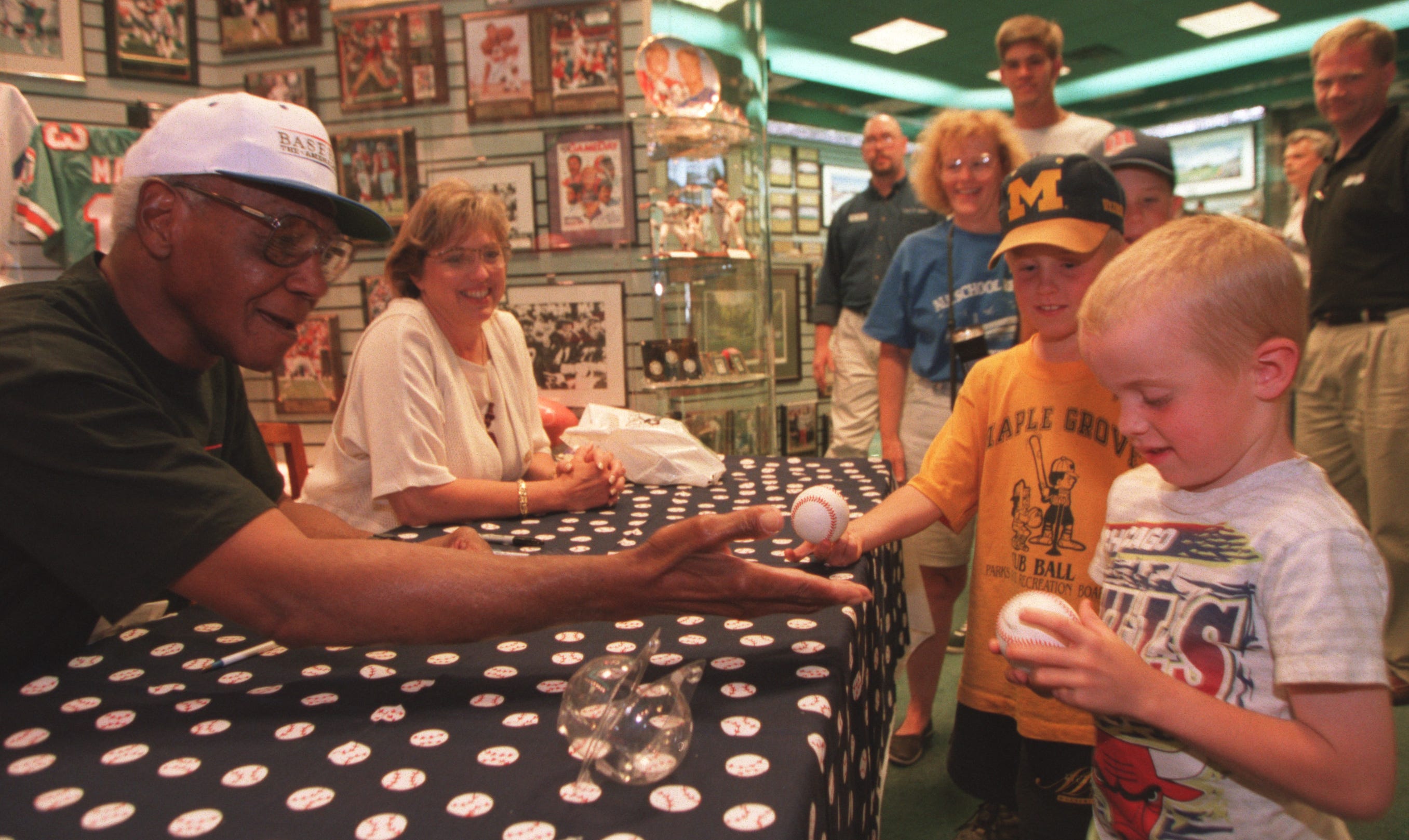
Funny, the things you remember. I remember it being dark outside. It probably wasn’t all that dark — the call came in the early evening. But the calendar had turned to autumn, and in the early days of autumn the sun goes down earlier than you expect. The body clings to summer.
I remember it being dark.
The girls were asleep, maybe. They were so little then. Elizabeth had just turned 5. Katie was still 1. I was playing a tune of sorts on our new piano, which had been delivered earlier in the day. The piano person had shown me the lever that dampens the sound, and that lever was pulled so that the song was muffled and quiet and wouldn’t wake anyone up.
When the phone rang, and I saw the number, I knew before I even answered.
I had been expecting the call.
I had been dreading the call.
“He’s gone,” Bob said. There was so much more to say, but there was no time to say anything else. Bob had other calls to make. And I had an obituary to write.
I called the newspaper office to alert them. I walked the twenty-or-so steps to my office. On the way, I called up to Margo to tell her. She cried softly. “Go,” she said. I sat down in my office chair, turned on my computer, and created a document. A blank page stared back at me. I had forty-five minutes to fill that screen.
I closed my eyes and tried to shut out everything else.
“In a Lincoln Town Car on the way home from a funeral,” I typed, “Buck O’Neil said: ‘I don’t want people to be sad when I die. I’ve lived a full life. Be sad for the kids who die.’”
I stared at the words. And then I wrote.
“So this will not be a sad column, I hope.”
How did Buck O’Neil come into my life? I’m still not sure. He chose me, I suppose, just like he chose Bob Kendrick, just like he chose so many others who, for one reason or another, moved his spirit. I had written about him many times, of course. I was a Kansas City sports columnist. Buck was Kansas City. But he saw something more in me, something I didn’t see in myself, and he called me one day and invited me to have lunch with him at the old Peachtree Restaurant on the corner of 18th and Vine, where jazz used to pour out of every bar.
Buck’s favorite corner.
“Somebody should write a book about the Negro Leagues and the way it really was,” he said after we ate. “Somebody should write about how much fun we had. Somebody should write about how good we were. We all know about the hard times, the racism of those days, the sad stories. But somebody should write about all the good times we had. Somebody should write …”
He kept saying “somebody.”
And I was the only one there.
The trick to deadline writing — or at least one of the tricks — is to keep writing. Your enemy is not time. It’s blank space. There’s a hole in the newspaper, and your job is to fill that hole. There were thirty minutes left. I had only those two paragraphs on my screen.
How do you keep writing when your mind is empty and faraway?
You go back to the basics.
“Buck O’Neil died Friday after a prolonged stay in a Kansas City hospital,” I wrote. “He was 94 years old, almost 95. He lived a life for the ages. Buck used to say he had done it all — he hit the home run, he hit for the cycle, he traveled the world, he testified before Congress, he sang at the Baseball Hall of Fame, he made a hole-in-one in golf, he married the woman he loved, he shook hands with American presidents.”
Yes, I was beginning to hear his voice again. How many times had I heard him say these exact words when telling people about his happy life? He’d always start the same way: “I’ve been a lot of places and done a lot of things I really liked doing.”
I hit the home run! I hit for the cycle! I made a hole in one! I shook hands with presidents!
But he never ended it there. I wrote on:
“And,” he always reminded people, “I hugged Hillary.”
Buck loved that line. He always said it with such love, with such mischief. And I hugged Hillary. It made people on all sides laugh. Maybe those were just simpler times. Or maybe Buck just had a way of breaking through our divides, making them feel pointless and irrelevant since, truly, so much more connects us.
“Buck was the grandson of a slave,” I wrote. My mind had gone into full deadline mode now — there was no thinking left to do, no outlining, no pausing to consider more graceful words. I knew I had to tell the story of how he chose to play baseball. He was in a Florida celery field on a savagely hot day, and he shouted out, “Damn, there’s gotta be something better than this!”
“There is something better,” his father said. “But you have to go out there to find it.”
He went out there. He played semi-pro baseball. The Kansas City Monarchs scouted him. He was 25 when he played his first game for the Monarchs in 1936. Almost right away, they called him Cap. For Captain. He had that leadership thing in his soul.
Deadline was 20 minutes away.
I was there in the room on that February day in 2006 when Buck O’Neil found out that he was not getting elected to the Baseball Hall of Fame. There were four of us in the room, and three of us were furious and on the verge of tears.
The one who was not was Buck, obviously.
“That’s the way the cookie crumbles,” he said loudly and with spirit.
It was so unexpected. I think that’s why it hit so hard. You didn’t have to know anything about Buck’s baseball life to know in your gut that he was a Hall of Famer. People would see him in airports, and they would have no idea who he was; they would have no idea that he was a Negro Leagues All-Star, that he captained and managed Negro Leagues champions, that he infused Ernie Banks with his “Let’s Play Two” spirit, that he was the first black coach in the National or American League, that he convinced Billy Williams to come back to the game at his lowest moment, that he scouted and signed future Hall of Famers, that he was both the inspiration and force behind building the Negro Leagues Baseball Museum, that he spent a half century telling baseball stories that lifted the game and uplifted countless fans.
They didn’t know any of that.
But they knew, just knew, that he was a Hall of Famer.
“I can just tell you’re somebody!” one woman said to him at one of those airports, and he hugged her tight, and that happened all the time.
So the big feeling in that room was shock. How could anyone see Buck O’Neil and not see a Hall of Famer? It didn’t make sense to us. But Buck had faced disappointments so many times before, much bigger disappointments. They didn’t let him attend Sarasota High because of the color of his skin. They didn’t even consider letting him manage in the minor or Major Leagues because of the color of his skin. His wife Ora saw a hat she liked in a department store, but she couldn’t try it on to see how it looked because, in those days, if a Black person tried on a hat, they had to buy it.
No matter what life threw at him, he refused to be bitter.
He refused to have his faith shaken.
“There are so many more good people than bad people,” he would say. And then he would pause and add, “Actually, I don’t think there are any bad people. There are people who do bad things. But there aren’t bad people.”
When you look at that life that way, you’re not going to let a Baseball Hall of Fame vote break your spirit. And Buck didn’t. When seventeen Negro Leagues players and executives were inducted into the Hall of Fame five or so months later, Buck O’Neil was there. He was already quite ill; he would be admitted to the hospital just days later. But he spoke on their behalf. He sang on their behalf.
“I’d rather be right here right now than any place I’ve ever been,” he said.
Five minutes before deadline, I realized that I had written enough words and would fill the hole in the newspaper. All I needed was an ending.
“Even though it’s late at night, and I can hardly see the keyboard because of the tears, I know Buck would not have wanted any of us to cry,” I wrote. “So, instead, I will relive once more his greatest day.”
That was the day in Memphis, Easter Sunday, 1943. First time up: a double. Second time: a single. Third time, he hit the ball over the right-field fence. Fourth time, he hit it high off the left-field wall, and it bounced back, and Buck was fast in those days, he could have rounded all the bases. But he stopped at third. He got the cycle.
Back at the hotel, there were some schoolteachers in the lobby, and Buck went down to meet them, and one caught his eye.
“My name is Buck O’Neil, what’s yours?” he asked.
Her name was Ora. And they would be married for 51 years.
That night, in the darkness, I ended the obituary this way.
“That was my best day,” he said. “I hit for the cycle, and I met my Ora.”
“It was a good day,” I said.
“It’s been a good life,” he said.
All this happened exactly 20 years ago today. When I finished writing, I took a deep breath, felt the tears overwhelm me, and promised myself I would never read what I had just written because I was sure it wasn’t worthy of Buck. How could it be? Forty-five minutes isn’t enough time to capture the spirit and passion and depths of any life, much less a 94-year life as rich and full as Buck O’Neil’s.
I thought about the day after the Hall of Fame vote. I was walking through a bookstore when my phone rang. It was Buck. He asked me for a favor.
“Can you write something to thank everyone who has reached out to me after the vote?” Buck asked. “Can you tell them I have never felt more loved?”
I told him I would. There was a long pause, and then Buck said that a friend had come to him recently and asked, “Who is that white boy that’s always following you around?”
I laughed. “What did you tell him?” I asked.
“I told him, ‘That’s my son,’” Buck said.
I promised myself that I would never read that obituary again because no words could ever sum up the optimism, the enthusiasm, the sweetness, the drive, or the delight of Buck O’Neil. I still believe that. But a few days later, when the moment was less raw and perspective was beginning to set in, I did read the obituary. And I found something amazing: It was the best thing I could write. I could have had 10 years, and I wouldn’t have written anything better.
And I realized that was because Buck’s voice had guided me through it all.
I should have known that Buck O’Neil would never let me fail.
Joe, your writing connects more people to Buck and his incredible spirit every day.
My honest reaction was, "Aw, man. Joe, how many times are you going to MILK this thing. We've read the obituary; you've reposted it a thousand times. We've read the book. I'm sick of reading the same dang story."
And then there was that line about Buck's best day. And I smiled. And I laughed. And the tears welled up again.
Damn you, Joe Posnanski. You got me again.