


Still in Los Angeles with a million things swirling around, so I don’t have a lot of time, but I did want to give you a chance to riff for a moment off a fascinating find by Joe Sheehan in his always fascinating newsletter.
You might know that the folks at Statcast™ offer a series of “expected” statistics—expected batting average, expected on-base percentage, expected slugging percentage, etc.
They establish these expectations with those Statcast™ classics, launch angle and exit velocity. And these expectations have been, for the most part, quite accurate. Last year, for example, they nailed batting average perfectly: Expected batting average was .248 and the league actually hit .248. And the expectations for on-base percentage and slugging percentage were within .001 of the real numbers.
It hasn’t always been quite that accurate—I would guess that with more data they’ve been able to adjust and refine the expectations—but it’s been pretty accurate, and here’s the thing: From 2016 to 2023, batters have generally been able to outperform the expectations. Here are batting averages vs. expected batting averages since 2016:
2016: +.007 (.255 to .248x)
2017: +.006 (.255 to .249x)
2018: +.006 (.248 to .242x)
2019: +.005 (.252 to .247x)
2020: +.000 (.245 to .245x)
2021: +.002 (.244 to .242x)
2022: +.003 (.243 to .240x)
2023: +.000 (.248 to .248x)
That’s a lot of numbers, but you can see—most years, players hit better than their expectation, and they have never hit below their expectations.
Yep. You know what’s coming in 2024.
2024: -.007 (.240 to .247x)
Batters are WAY underhitting their expectations.
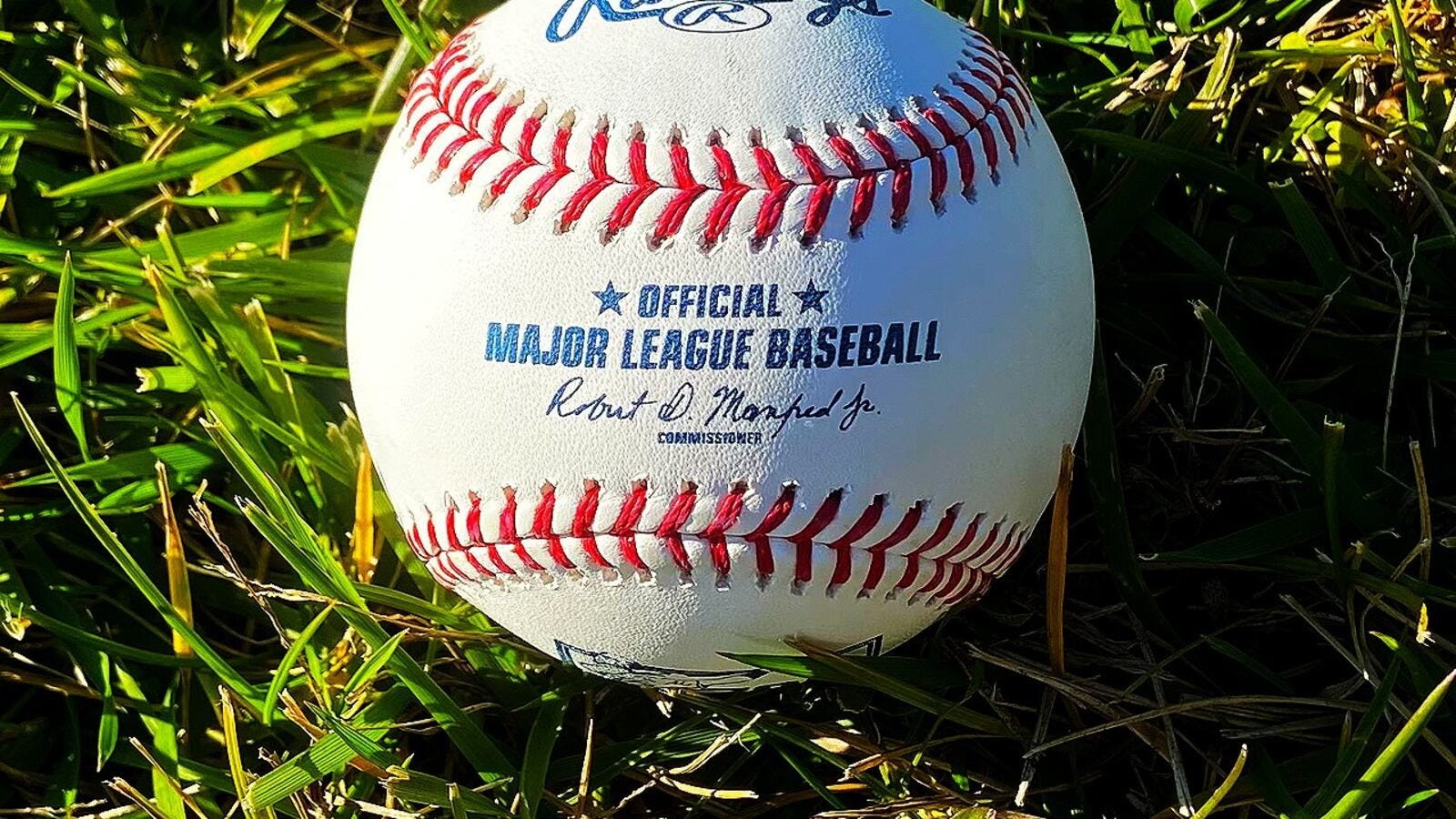
When you look at slugging percentages through the years, it gets even starker.
2016: +.011 (.417 to .406x)
2017: +.011 (.426 to .415x)
2018: +.010 (.409 to .399x)
2019: +.011 (.435 to .424x)
2020: +.003 (.418 to .415x)
2021: +.004 (.411 to .407x)
2022: +.007 (.395 to .388x)
2023: +.001 (.414 to .413x)
Yep, every year, batters have outslugged the expectation, at least by a little bit. You ready for 2024?
2024: -.019 (.387 to .406x)
Yikes.
So you look—runs are down this year, slugging percentage is at its lowest point in a decade, batting average is at its lowest point since 1968, and as Joe points out, you can’t even blame strikeouts, because strikeouts are actually a little bit down. What’s happening is that hard-hit balls are not flying out of the park, and they’re not turning into hits (batting average on balls in play is just .288, a 30-year low). Sure, we’ll throw in all the caveats about it still being earlyish in the season and the weather will warm up, but we’re now two months in, so this isn’t just the April blues. There’s something happening here with the baseball… with defense… with something, and pitching is utterly dominating the game.
Just something to think about. OK, I’ve got to get back to my massive project.

Hits are sure hard to come by, but I thought it was just because I watch the Mariners every day.
1) The baseball seems to not fly as far as it did in previous years. Is the ball softer? Is it designed to have more drag? Did MLB install fans to create air currents to knock the ball down? I'm actually surprised we don't have public data correlating "exit velocity" with ball distance. That would give a definitive answer on the ball being different.
2) Batters are striking out a lot. I watch the Orioles and as a lineup they fall into a pattern of striking out in bunches. The exit velocity of a strikeout is zero.
3) Good pitchers, or at least pitchers having above league average success, are doing fantastically well. My fantasy teams usually have blah pitching. This year not only is my pitching doing well but it is insanely good. I am having multiple weeks where my team posts a sub 2.00 ERA and sub 1.00 WHIP. And I am doing it with pitchers who have never won a Cy Young and may not even be in the league in 3 years.
4) I saw a MLB stat that pitchers, like Jordan Hicks, who have dialed down their velocity, are having much greater pitching success. I do think we are seeing a changing paradigm with pitchers prioritizing location, movement and deception more than velocity. But the success of theses pitchers, including Hicks, may be that batters making contact is not resulting in as many hits and home runs.
5) I have no issue with pitching beating hitting, except as it concerns the strikeouts and the inability of teams to play "small ball" and create runs when the opportunity sits in their lap. Going back to the Orioles, the other night they had the bases loaded and no outs. The next three batters: Strikeout, Force out at home on a ball that had an exit velocity of 5 mph and dribbled 15 feet, Strikeout. This is not entertaining baseball.