


For the record, I am surely not the only golf writer on earth who does not actually play golf. Surely. Yes, it’s true, I don’t know that I’ve ever actually MET another golf writer who doesn’t play golf. But surely he or she exists.
The last time I played a round of golf — and I promise you that at some point this will wind back around to Matt Fitzpatrick and something extraordinary that happened at the U.S. Open — was 30 years ago. It’s a story. See, the last time I played golf was 1992, and it was at Augusta National. In those days, I was columnist at The Augusta Chronicle, and the newspaper had this very cool deal where everyone who covered the Masters for the paper got to play a round of golf at Augusta National on the last day before the course closed for summer.
My round there is actually kind of legendary. I shot 72. On the front. That’s not a joke. Well, it is a joke, but it’s a true joke. I was out there with a starter set of clubs (a driver, 3-iron, 5-iron, 7-iron, 9-iron, wedge and putter). On the first hole, I five-putted from the fringe — which means that if they had put the starting tee on the fringe, I would have bogeyed the hole.
I was so bad out there that — this is absolutely true — the Chronicle changed the rules so that in order to play at Augusta National, newspaper employees had to play in a qualifying tournament.
In any case, that was the last time I played a round of golf*, and yet I’ve written literally thousands of golf stories since then. I’ve written the back page column for Golf Magazine. I’ve covered Masters, U.S. Opens, British Opens, PGA Championships, Ryder Cups, lots of other events, I wrote a book about Tom Watson and Jack Nicklaus, I’m just saying it’s weird. I love golf. And I don’t play.
*I would be remiss if I did not point this out: I did not actually play all 18 holes. A friend of mine at the paper was getting married, and we had to leave after 16 holes in order to make the last ferry to his wedding locale. So I guess, technically, speaking, I’ve actually NEVER played a full round of golf.
So … how to explain? Well, the easy way to explain it is that I also don’t play, say, football, but I love writing about it … I don’t think that gets at it, though. Golf is a personal game in a way that football is not. You don’t see football writers standing around team practices pretending to throw footballs. But you pretty much NEVER see three golf writers in one place where one of them is not swinging an invisible club.
Golf writers, many of them, wear spikes.
No, the better explanation, I think, comes down to Sunday afternoon, a slowly fading sun in Boston, an English golfer named Matt Fitzpatrick in the very last place on earth he wanted to be: a bunker off the 18th fairway.
I told you we’d get to the tournament eventually.
Fitzpatrick is 27 years old and, before Sunday, he had never won a tournament in the United States. He’d won a few times internationally and was ranked in the top 20 in the world, but the U.S. thing was a strange deal. He’d played in more than 100 PGA Tour events since turning pro as a 20-year-old, and it just seemed odd that someone with his game, his touch around the greens, his brilliant iron play, his meticulous golfing mind*, couldn’t quite break through and win in the states.
*According to Golf Digest’s Dan Rapaport — a close friend of Fitzpatrick’s — Matt has charted literally every single shot he has hit since he was 15 years old.
It’s like stuff always happened. He has had a lot of Top 10 finishes. But something would keep him from the top. He had a chance at the PGA Championship last month but couldn’t quite hit the shots he needed on Sunday — particularly on the relatively easy 17th hole — and finished two shots back.
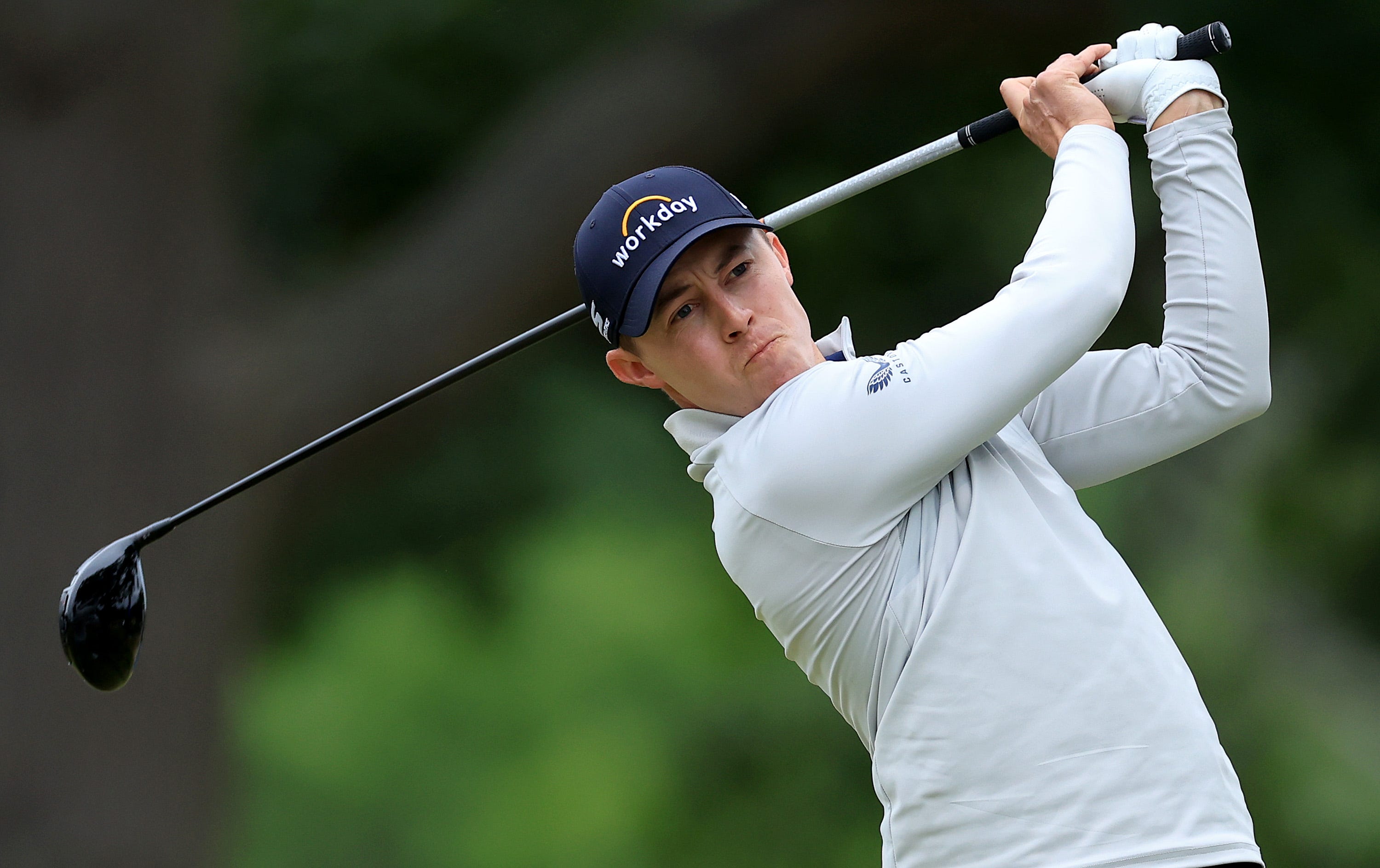
But this Sunday, at The Country Club in Brookline, he played the round of his life. He would end up hitting 17 of 18 greens, which is just an incredible achievement at a U.S. Open, with the rough high and the greens hard and the pressure turned up to 11. Though there were several supporting actors, Sunday’s round really came down to three players — the No. 1 golfer in the world, Scottie Scheffler, the hard-luck Will Zalatoris (who is only 25 but had already finished second at three different major championships), and Fitzpatrick. All three made it to six-under-par at some point in the round, and all three felt the loss of oxygen at that height and fell back.
One of my favorite-ever golf stories is the one about Dr. Gil Morgan at the Pebble Beach U.S. Open in 1992. He was basically unconscious for the first two rounds — could not miss — and after seven holes on Saturday he stood at an astonishing 12-under par. He was the first golfer EVER to get to a double-digit-under-par score at a U.S. Open.
Then, on one of the next two holes, he short-sided himself on a green, found his ball in some sort of hornets’ nest of rough and faced some absurd downhill shot where it was literally impossible to keep the ball on the green.
“OK,” he said to himself, “I guess this is where the U.S. Open begins.”
He went plus-17 the rest of the way. Yeah, that’s right. Plus-17.
That’s what it seemed like six-under was like for the golfers on Sunday — it’s like the Country Club was saying, like God in the Book of Job, “This far you may come and no farther.”
Scheffler got to six-under after birdieing four of his first six holes. But he then made back-to-back bogeys on 10 and 11 — missing a super-short put on the 11th — and though he had chances, could never get back to that magical six-under.
Zalatoris got to six under on the 11th hole. He promptly bogeyed the 12th. He, too, could never get back to minus-six.
Fitzpatrick, meanwhile, made it to six-under with a birdie on the 5th hole. Then he bogeyed No. 6. He made it back to six-under after a birdie on No. 8. Then he bogeyed 10 and 11.
At this point, it looked like there might be a chance for someone to do what Justin Thomas did at the PGA Championship — sneak in through the backdoor. Hideki Matsuyama gave it a try. Colin Morikawa gave it a try. Even Rory McIlroy, who had a wild birdie-bogey-birdie-bogey-birdie roller-coaster day, gave it a try.
But Fitzpatrick was not about to let it happen to him again. He got a great break on the 15th hole. He and Zalatoris were tied at 5-under as they teed off No. 15. Both hit their drives way right, which is a death sentence on that hole. If anything, Fitzpatrick’s shot was significantly worse — his shot was WAY right.
But sometimes in U.S. Open golf, worse is better. Zalatoris’ ball ended up in thick rough; the best he could do was muscle it out into a bunker. But Fitzpatrick’s ball was so far right, it ended up in the gallery, where the grass had been trampled down. Fitzpatrick took advantage, hit a brilliant approach shot, made the long birdie putt and reached that magical six-under-par number.
Now, all he had to do was hold it for the final three holes.
And this — THIS — is why I love golf, even if I don’t play the game. I love it because it is, I think, the best sport in the world at revealing how someone will stand up against pressure. In team sports, you can lean a bit on your teammates. In tennis — the sport I do play — there is certainly plenty of pressure, but the action moves so quickly that you often don’t even have time to think about it.
But in golf, the pressure is always there, a heavy fog. It’s there when you walk, it’s there when you pick clubs, it’s there when you read greens, it’s just there, your constant companion, a persistent question: “Can you hit your best shot with so much on the line?”

JoeBlogs is a reader-supported venture. Free and paid versions are available. The best way to support us here is by taking out a paid subscription. And hey, we do have a lot of fun, so I hope you’ll come along.
Joe

Fitzpatrick held up against the pressure — until his tee shot on 18. He led by one shot. And then, not unexpectedly, he hooked his drive into a bunker, absolutely the one place he could not hit it. Fitzpatrick is a great golfer with all the shots. But the one shot he hates most of all is, you guessed it, hitting approach shots out of fairway bunkers.
And this one was particularly nasty because there was a hump in front of his ball, preventing him from trying to hit the ball at the pin.
Will Zalatoris looked at the ball and the lie and the angle and thought it was, at best, a one-in-20 shot.
Yes, this is what I love about golf. There’s no hiding from the pressure. Matt Fitzpatrick was going for a little piece of golf history — he was trying to win the U.S. Open, win for the first time in the U.S., become the first English golfer to win the Open since Justin Rose almost a decade ago, and only the second English golfer to win it since 1924.
Also, there is this fun little fact: Fitzpatrick won the U.S. Amateur at The Country Club. The only male golfer to win a U.S. Amateur and U.S. Open at the same course was Jack Nicklaus.
You would hope and expect that none of this was playing in Fitzpatrick’s mind as he set up for the shot. He talked it over a bit with his caddie, Billy Foster. Then he stepped into the bunker, took a few seconds to get his mind clear, and hit the shot.
It was as pure as pure can be. Tom Watson will tell you that when he hit his purest shot — the seven-iron he hit on the 18th hole at Turnberry in The Duel in the Sun against Nicklaus — he thought the ball looked like a piece of art against the Scottish sky. In good times and bad, he would think back to that shot and the way the ball looked.
And I imagine Matt Fitzpatrick will do the same. His shot faded beautifully, landed softly on the green, and set him up for an easy two-putt par that would keep him at that magical six-under-par. As it turned out, Zalatoris had one final shot to get to six-under himself, but his final putt rolled just left of the hole. And Fitzpatrick had won.
There is something stirring about seeing someone display grace under pressure. Heck, that’s what all of Hemingway’s books are about. That’s why I love golf. After it was over, Fitzpatrick was asked that most ubiquitous and silly of questions: “How do you feel?”
He gave the only answer there is to give. He said: “There are no words.”


If you enjoyed this post, it would be awesome if you shared it with your friends. Thanks, as always, for supporting JoeBlogs!

It was a great final round with a great ending. Such a good shot. No one even mentions the awkward stance and the way he was choked down on the club. I was pulling for Scheffler all day but I enjoyed that final pairing. I wish everyone played as quickly as Fitzpatrick does. It was refreshing to see.
So Joe you may not be the only golf writer who does not play golf- I really have no idea. But I would imagine you have to be the only person who has played only one round of golf in their life- even if only 16 holes- and that round was at Augusta National. I mean what a story.