


Here, in the moments after losing my friend, I could tell you a hundred stories about Len Dawson. I could tell you about the time he got locked in a stadium with Howard Cosell. I could tell you about the time in college, at Purdue, when he was playing defensive back, and he tried to tackle Ohio State’s bruising running back Bobby Watkins, and he woke up a little while later thinking that defense wasn’t for him.
I could tell you they called him Lenny the Cool, but they called him the Golden Boy back at Purdue, before anyone gave that nickname to Paul Hornung. I could tell you about the time in 1948 when he stood outside a bar in Alliance, Ohio, and watched Cleveland’s Satchel Paige pitch in the World Series on the only black-and-white television in town, and how he cherished that memory as much as he cherished the victory in Super Bowl IV. I could tell you about the psychic who said his stars were aligned before Super Bowl IV. And they were.
I could tell you that he was the seventh son of a seventh son, and he took that seriously. “It all comes down to that,” he would say. “I’ve been blessed.”
I could tell you that he wanted to be a baseball player, not a football player; he loved talking about how he might have been a major league second baseman if things had played out differently. I could tell you that he was the first-round pick of the Pittsburgh Steelers and was, for a time, a backup to a very old Bobby Layne.
“He had to be at least 73,” Lenny said. “I didn’t learn much about football from Bobby. But I picked up every one of his bad habits.”
I could tell you that the Steelers gave up on him, and he went to Cleveland to play for his hero, Paul Brown. Well, no, he didn’t actually play. In his first five seasons with Pittsburgh and Cleveland, he started two games. The Browns released him. I could tell you that the odds of a 27-year-old NFL washout becoming a Hall of Famer and a football icon are much closer to none than slim.
“Ah,” Lenny would say then, “but I’m the seventh son of a seventh son.”
I could tell you how he joined the Dallas Texans of the brand-new American Football League — he only got the chance because the Texans’ coach was Hank Stram, Dawson’s favorite assistant coach at Purdue — and how over the next few years Dawson and Stram helped reinvent the quarterback position.
In a time of mad bombers, Dawson played quarterback with the precision of a watchmaker. He led the AFL in completion percentage pretty much every year. He led the AFL in touchdown percentage pretty much every year. He led the AFL in quarterback rating pretty much every year. He led the Chiefs to Super Bowls I and IV, with them winning IV when his stars were aligned.
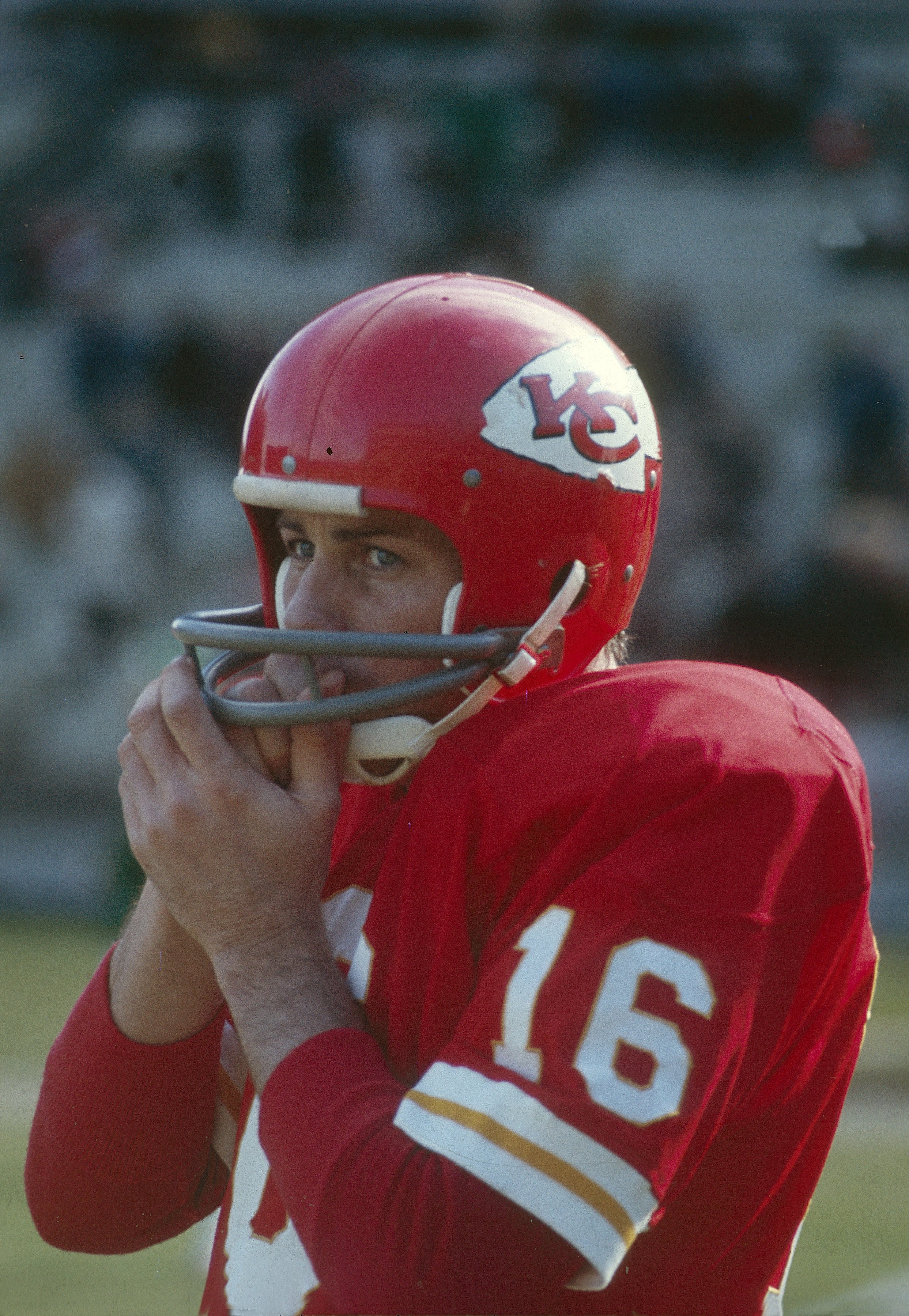
For much of that time, he was also a sports broadcaster in Kansas City. On Dec. 25, 1971, the Kansas City Chiefs lost a soul-crushing, double-overtime playoff game to the Miami Dolphins — it remains the longest game in NFL history. Dawson was the Chiefs’ quarterback in that game. And when it ended, he put on a suit and did the sports report for KMBC television in Kansas City. “One of the toughest things I’ve ever done,” he said. “But I didn’t stutter.”
Yes, I could tell you about Lenny’s football pet peeves — quarterbacks who throw into double-coverage, teams that waste timeouts, quarterbacks who take a sack rather than throwing the ball away. And I could tell you about football things that impressed him — running backs who fearlessly hit the hole, quarterbacks who look off the safety and, mostly, players who so clearly love playing the game.
Most of all I could tell you how cool he was, always, the coolest guy in the room. It’s a coolness that crosses the years. I mean, just look at this photograph:
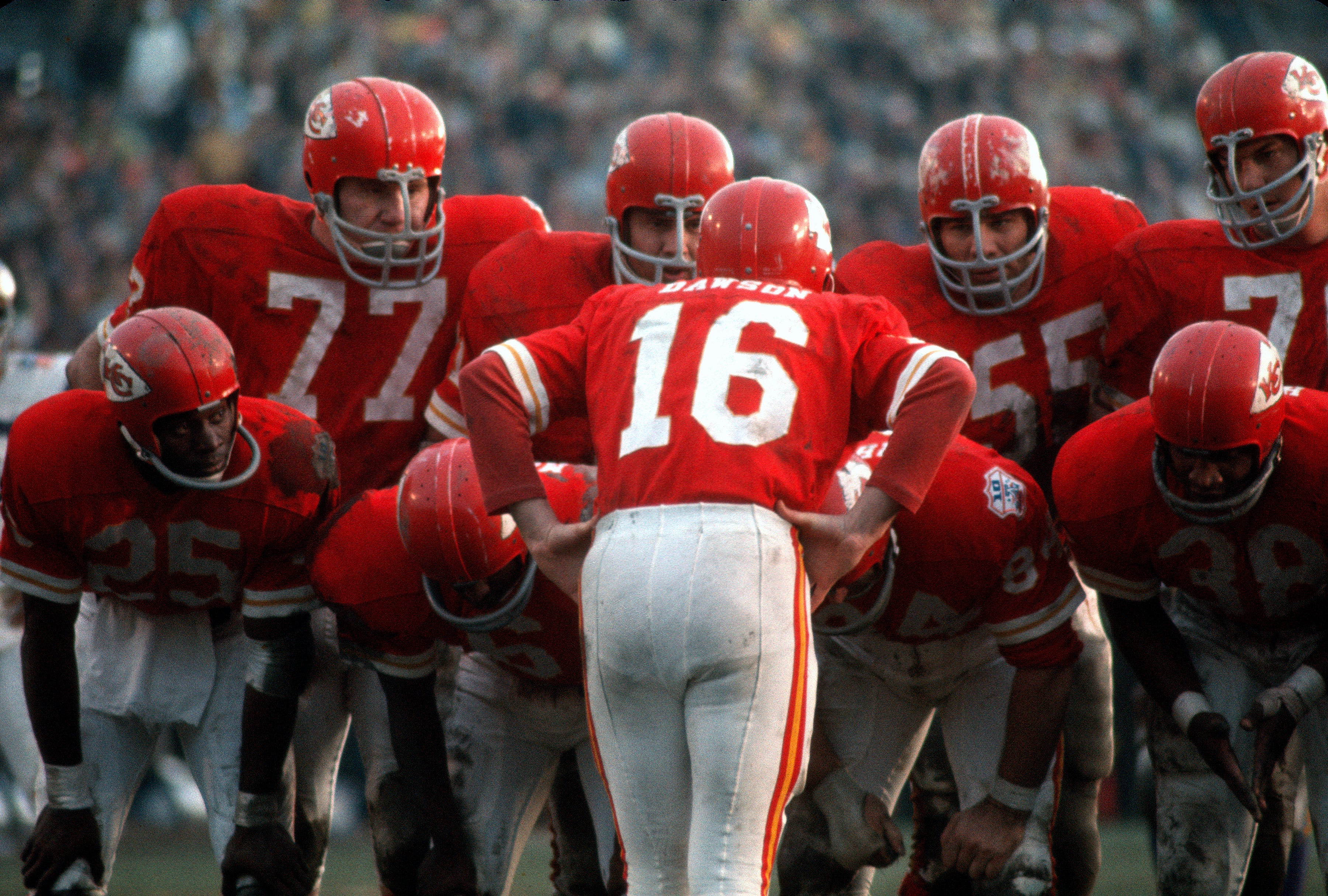
Has there ever been a cooler huddle than the Chiefs’ choir huddle? Has there ever been a cooler quarterback in the middle of it, all eyes on him? He just had that something, that aura, that flair, that spirit …
“Seventh son of a seventh son,” he’d remind you.
But, if you’ll permit me, on this sad day as we remember the great Len Dawson, who died today at 87, I’d like to tell a personal story.
As a rule, I am firmly against April Fools’ Day gags. They are mostly terrible, often cruel, and frankly it feels like every day is April Fools’ in our current world. But I did come up with one April Fools’ Day column that I really wanted to write. It was 2001 in Kansas City. The Chiefs were coming off a dismal season. They fired the coach. Their quarterback, Elvis Grbac, had a 20 percent approval rating in town at best, and soon he left for Baltimore. It was looking pretty bleak.
And so I called Lenny with an idea. What would he think if I wrote an April Fools’ Day column about him making a comeback at age 65?
“Let’s do it,” he said without hesitation.
And so we did it — on April 1, 2001, I wrote a column breaking the news that Len Dawson would come to training camp in River Falls, Wisc., with the intention of winning the starting quarterback job.
“These days, with the new rules,” Dawson told me, “all you need to do is be an accurate thrower. I could always do that.”
“There aren’t that many quarterbacks around,” he continued. “They’re looking at who? Trent Dilfer? Tony Banks? They are just looking for a warm body.”
“Hey if Michael Jordan can think about coming back,” he added, “well, why not me?”
“And hey,” he concluded, “I’ve had fewer concussions than Troy Aikman.”
And he just kept on going. He said that part of the deal he’d made with the Chiefs was that he would call his own plays. He talked about how much he was looking forward to throwing to Tony Gonzalez. It was incredible. It was hilarious. Our star photographer, John Sleezer, got a photo of Lenny with a single-bar helmet. The headline was, “Here Comes Len Dawson to the Rescue.” It ended up being one of the most beloved columns I wrote in Kansas City; people still mention it to me now and then.
“I’m telling you,” Lenny said, “it just comes down to throwing accurate passes. If you can throw accurate, you put up a lot of numbers … I’ve always wanted to see what I could do with these new rules.”
For years after that, Lenny and I would laugh about that column. He said a couple of friends didn’t make it to the end—for the big reveal—and called to ask if he was serious about coming back. I got a couple of letters along those lines, too.
“You know,” he said to me one day, “I really do think I could have been a good quarterback with all the new rules. I mean, why not? Better protection. More receivers. All you have to be able to do is make quick decisions and throw accurately. That was my whole game.”
“Do you think you would have preferred playing today?” I asked. He thought about it.
“Nah,” he said. “I mean, the money’s better. But I think we had more fun.”

In 1982 my mom ran a fundraiser for diabetes - the Silver Needle hosted at the Arrowhead club. There was an action. Len Dawson donated a cheesecake of all things. We went to his house to pick it up. He invited us in and walked my brother and me through his trophy room for a half out or so.
I am sure there will be a few people that look up his stats and remain unimpressed because the game then was so different. Linebackers and D backs could knock a receiver on his ass at any point in his route, and there were no such things as timing patterns. Rushers could take two full steps and a launch after a throw and punish a QB with no penalty.
When Len retired, despite his late start,he was tied for 2nd in all time QB Rating, 4th in TDs, 7th in yards, and 2nd in TD/INT ratio - with 1.3. This would seem terrible today, but the league average in his career was 0.81. There wasn't a year where the NFL had more TDs than interceptions until 1983, which was after two sets of major changes to defensive rules since his retirement in 1975. The league did not average over his career mark in a season until 2004, when Tom Brady was winning his 2nd Super Bowl. Len threw 30 TD passes in a season in 1964. That doesn't seem like a big number now, but even last year only 10 out of 32 teams had 30 or more as a team. Len was the 5th person to do it.
In addition to his on field skills, Inside the NFL was his baby from the start, he hosted for 25 years, and for those of you not old enough to remember what it was then, it was the ultimate highlight and information show when there wasn't many places to find that, and few opportunities to see it. He was also a Chiefs radio broadcaster for 24 years, including 9 years with a young Kevin Harlan in what was probably the best radio team I have heard still. (Harlan is my favorite TV play by play guy even now, and some would say that he is better still at calling basketball), as well as a sports anchor (and sports director) on a local TV news station for over 40 years.
I was lucky enough to meet and interact with Len a few times over the years, and he was one of the classiest guys you will ever meet.
In a local note, if you were building a Mount Rushmore of KC sports, Lenny has the top spot. (Gearge Brett, Tom Watson, and you can argue about the 4th)
A great man, and he will be missed.