


Tom Tango threw out a question the other day that — as usually goes with Tom’s great questions — led me to think about something entirely different.
Tom’s question was this: Was the 2001 Baseball Hall of Fame ballot the most “anti-sabermetrics ballot ever”?
On the surface, that’s a fairly straightforward question. If I were the sort of person who understood correlations (which I am not), I probably could plot two points — a player’s Wins Above Replacement and a player’s Hall of Fame percentage — and see which year provided the least correlation. I would bet 2001 would be right up there in terms of least correlation; WAR did not exist then, and clearly the way WAR places a value on players was NOT the way that 2001 sportswriters placed values on players:
Here’s how the 2001 ballot shook out — by player WAR, from highest to lowest — with each player’s Hall of Fame percentage:
Bert Blyleven, 94.5 WAR, 23.5%
Lou Whitaker, 75.1 WAR, 2.9% (dropped)
Gary Carter, 70.1 WAR, 64.9%
Luis Tiant, 66.1 WAR, 12.2%
Dave Winfield, 64.2 WAR, 84.5% (elected)
Tommy John, 61.6 WAR, 28.3%
Keith Hernandez, 60.3 WAR, 8.0%
Kirby Puckett, 51.2 WAR, 82.1% (elected)
Jim Kaat, 50.5 WAR, 26.2%
Ron Guidry, 47.8 WAR, 5.2%
Jim Rice, 47.7 WAR, 57.9%
Dale Murphy, 46.5 WAR, 18.1%
Jack Morris, 43.5 WAR, 19.6%
Don Mattingly, 42.4 WAR, 28.2%
Andy Van Slyke, 41.3 WAR, 0.0% (dropped)
Goose Gossage, 41.2 WAR, 44.3%
Dave Parker, 40.1 WAR, 16.3%
Dave Concepcion, 40.1 WAR, 14.4%
Lance Parrish, 39.5 WAR, 1.7% (dropped)
Kirk Gibson, 38.4 WAR, 2.5% (dropped)
Steve Garvey, 38.0 WAR, 34.2%
Jose Rijo, 36.5 WAR, 0.2% (dropped)
Dave Stewart, 26.5 WAR, 7.4%
John Kruk, 25.1 WAR, 0.2% (dropped)
Bruce Sutter, 24.1 WAR, 47.6%
OK, it’s pretty clear there’s little-to-no correlation at all. Of the top 10 players in WAR, only two were elected that year, only two more would ultimately get elected (one, Blyleven, begrudgingly) and three of the other six fell off the ballot before their expiration date.
Meanwhile, almost as if at random, Nos. 11, 16, and 25 in WAR were elected to the Hall, while Nos. 13 and 21 got serious consideration.
Was it the most anti-sabermetric ballot ever? Maybe, maybe not. There were some crazy ones in the 1970s — take 1975, when none of the top 11 players in WAR were elected (including obvious greats such as Eddie Mathews, Robin Roberts, Pee Wee Reese and Duke Snider), but No. 12 Ralph Kiner was.
But, again, the question leads to a different question for me: What has become the role of WAR in Hall of Fame voting? And even more to the point: Where do we trust WAR to give us insights into players’ greatness? And where do we not?
I don’t want to overcomplicate things here, so, if you’ll indulge me, let me start with a quick rundown of WAR as used by Baseball-Reference (FanGraphs’ WAR is slightly different for every-day players and very different for pitchers, but we’ve been over that).
Essentially, for every-day players, WAR’s intention is to measure the FULL value of the player. Take Roberto Clemente. He was a great hitter, as we know, career .317 average, exactly 3,000 hits, and bWAR calculates he was worth 377 more runs than average. That doesn’t make him one of the VERY best hitters ever — Clemente didn’t walk and he didn’t hit with slugger’s power — but it puts him comfortably as one of the 100 best hitters of all time, right between Freddie Freeman (so far) and Jack Clark.
Clemente was an excellent baserunner — he was not a base stealer so much, but he excelled at taking the extra base, and even though he twice led the league in total double-play grounders, he was actually better than average at avoiding double plays, too. In all, bWAR calculates his baserunning to be worth 33 runs above average.
Clemente was the greatest defensive rightfielder in baseball history, and this is reflected by bWAR, which calculates him being 205 runs better than average. Rightfield is not one of the game’s elite defensive positions, so some of that is adjusted for position, but still, his defense is baked into his WAR … and when you add it all up (and make the necessary adjustments), Clemente is valued at 94.8 Wins Above Replacement, placing him 19th among every-day players over the last 100 years.
So, for position players, what WAR offers is a holistic view — it’s meant to give you a full picture of the ballplayer. Before WAR became ubiquitous in baseball analysis, this was much more a feel thing.
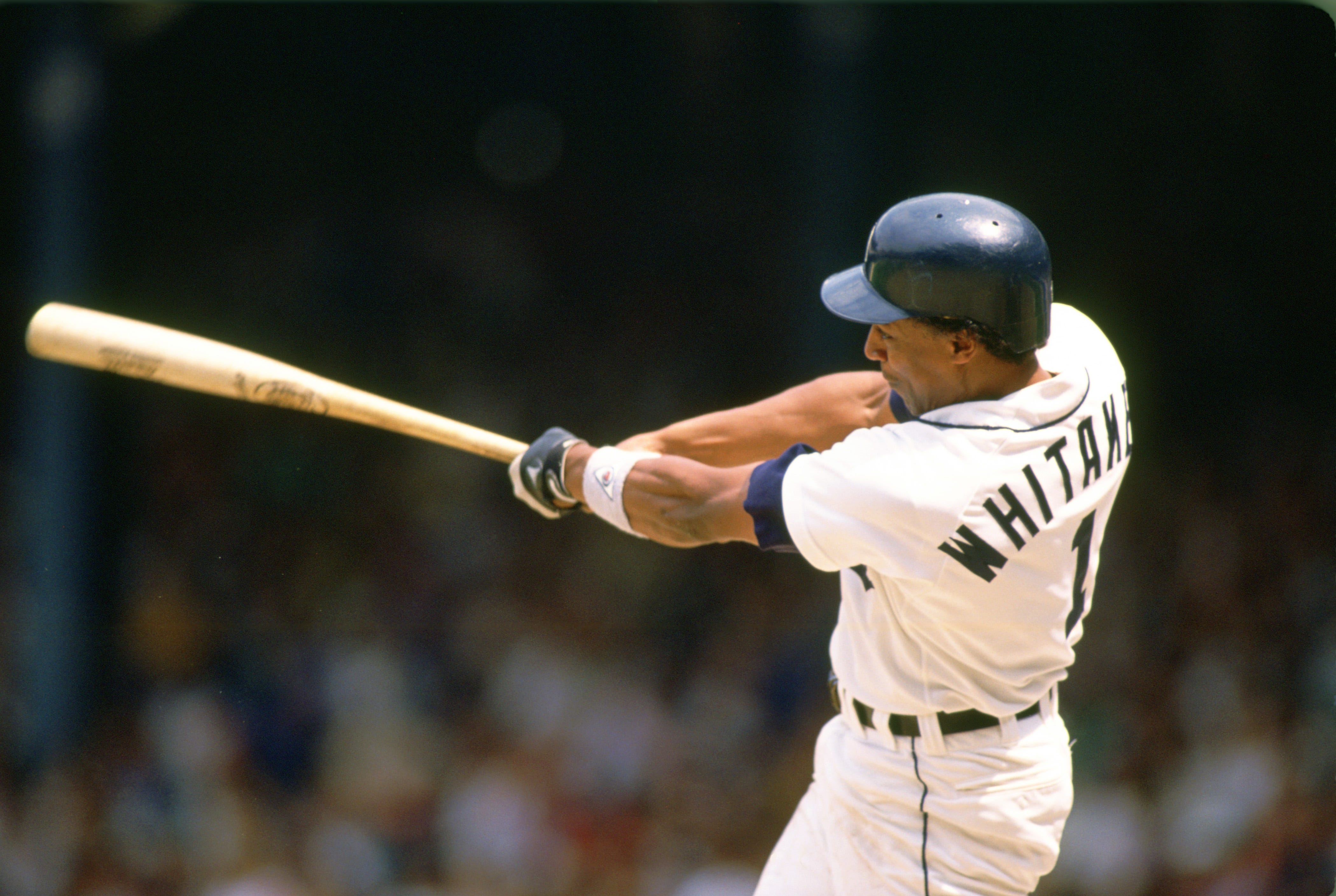
Lou Whitaker, for example, was viewed as a very good but not great player, because in 2001, the things you saw was that he hit .276 over his career, a bit of power, three Gold Gloves.
Voters saw his case the same way they saw Frank White’s case — White hit a lower .255 for his career, yes, but also hit with a little power and he stole a few more bases and he won EIGHT Gold Gloves. Same-same, right?
WAR said: No. Not same-same. Because Whitaker walked a lot more than White did (almost three times as often) and hit with more power, and that led Lou to being a MUCH better hitter than Frank, not even close.
Batting runs above average:
Whitaker: plus-209
White: minus-145
WAR did calculate White as a better defensive player, but not enough to make up THAT difference. Whitaker’s WAR is 75.1. White’s is 34.8.
For pitchers, bWAR builds around innings pitched and runs allowed. There are a bunch of adjustments for the level of the opposition, the ballparks, team defense, etc. I’d say the biggest difference between judging a pitcher by bWAR vs. the old way is that WAR doesn’t care about pitcher wins at all. That was the big thing in in 2001.
Blyleven didn’t win 300 games; otherwise, he would have been elected early in his writers’ ballot time. Blyleven also had a mediocre-looking 287-250 overall record, which gave the incorrect impression that he wasn’t an all-time great. WAR doesn’t concern itself with such illusions, and simply looked at his astounding number of innings and his ability to prevent runs — and suddenly he placed 12th all-time in pitcher WAR, just ahead of Warren Spahn and a little bit behind Randy Johnson.
And now the question: What do we trust? What do we not?
I looked at Hall of Fame voting the last few years, and this is what I think*:
*I should add here: I’m not making a judgment about what we SHOULD trust or NOT trust. I’m simply trying to look at the way voters vote and extrapolate how they (and we — I’m a voter) use WAR to make Hall of Fame judgments.
WE TRUST the way WAR gives us a view of the whole ballplayer. In 2023, the BBWAA voted Scott Rolen into the Hall of Fame. In 2020, Larry Walker was elected. In 2019, Mike Mussina was elected. I think it’s probably fair to say that NONE of them would have been elected pre-WAR. Look at their first-year percentages:
Rolen: 10.2%
Walker: 20.3%
Mussina: 20.3%
Everybody knew Rolen was a good defensive third baseman, but WAR accentuated the point. Everybody knew Walker was a player who did everything well, but WAR accentuated the point. Everybody knew Mussina was a very good and consistent pitcher, but WAR accentuated the point. Voters trust WAR to give the complete view.
WE DO NOT TRUST WAR when it comes to rating players who we suspect used PEDs. It isn’t that we doubt the on-field greatness of Barry Bonds or Roger Clemens, but in their cases (and the cases of numerous others such as A-Rod, Mark McGwire, Manny Ramirez, and so on), many of us turn away from the non-judgmental and unemotional way WAR ranks players.
WE DO NOT ALWAYS TRUST WAR’s defensive rankings. There’s good reason for this, but as I said above, I’m not trying to make personal judgments here. I would use the example of Andruw Jones. By WAR, he has pretty consistently underperformed by percentage of HOF votes. Compare his first few years on the ballot against, say, Omar Vizquel’s. — remember that Jones has a sizable 17-win advantage in bWAR.
2018: Vizquel 45.6%; Jones 7.3%
2019: Vizquel 42.8%, Jones 7.5%
2020: Vizquel 52.6%, Jones 19.4%
2021: Vizquel, 49.1%, Jones 33.9%
After 2021, some unsavory allegations came out about Vizquel and things shifted, but when thinking about WAR — I think everybody knew they were both great defensive players, but felt like WAR’s defensive rankings underrated Vizquel and overrated Jones, and voted accordingly.
WE DO NOT TRUST WAR when it comes to relief pitchers. At all. This was true in 2001 when voters preferred Goose Gossage and Bruce Sutter to Blyleven, Luis Tiant, Tommy John, Ron Guidry and other terrific starters.
But this was also true in 2023, when voters preferred Billy Wagner to solid starters Andy Pettitte and Mark Buehrle, among others.
Obviously, circumstances were different, but over the last five decades: Wagner, Francisco Rodriguez, Joe Nathan, Lee Smith, John Franco — not to mention Mariano and Trevor Hoffman — all received a higher percentage of the vote than Johan Santana. Think about that. Santana was the best starting pitcher on planet earth for a seven-or-so year period in the 2000s — the idea that a relief pitcher throwing 60-to-80 innings a season could be greater than that is pretty silly. That’s what WAR says.
But the writers — pretty much since the invention of the save — have placed a much, much higher value on relievers (particularly one-inning relievers) than WAR. One more time: We’re not making judgments here, so you can decide whether WAR or the writers have it right. But it’s a very clear clash.
I don’t know this for sure, but I feel confident that a similar clash is coming with WAR and catchers. Over the next few year years, Joe Mauer (55.2 WAR), Buster Posey (44.8 WAR) and Yadier Molina (42.3 WAR) will all be coming on the ballot, and I think all of them will get very serious Hall of Fame consideration, even though their WAR is less than, for example, Tim Hudson, who got just 3% of the vote in his second year on the ballot*
*Posey and Molina, specifically, have lower WARs than, among others, Lance Berkman, Roy Oswalt, Mike Cameron, J.D. Drew and others who got almost no consideration at all.

Hey, if you feel like it, I’d love if you’d share this post with your friends!

WHY WE LOVE BASEBALL Update
I dropped a whole lot on you last week about WHY WE LOVE BASEBALL (coming Sept. 5!), so I’ll just quickly reiterate some of that here. There are a couple of new developments too.
Tour Stuff
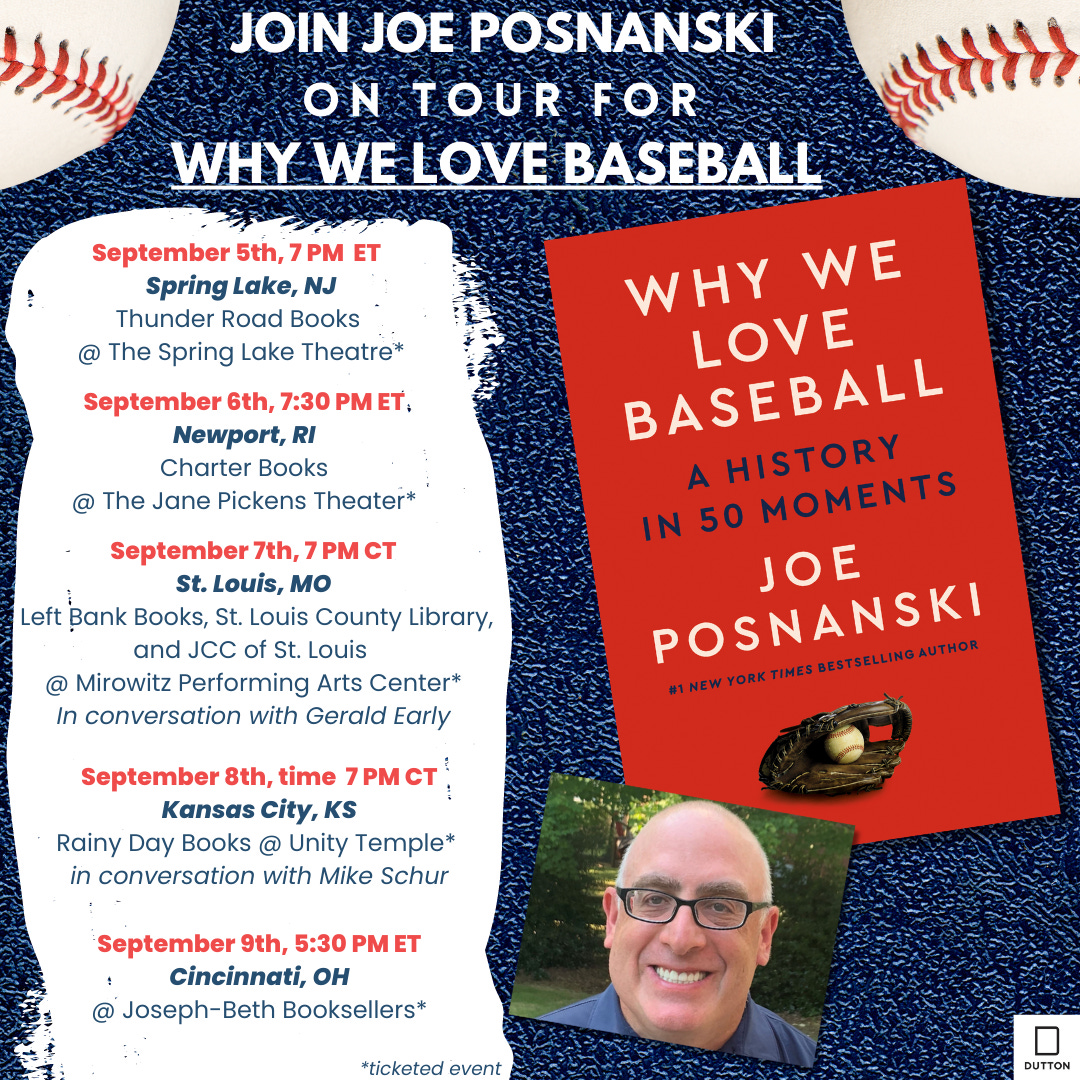
I announced the first week of the tour and couldn’t be more excited. The guests are out of this world.
Tuesday in New Jersey with Bob Costas!
Wednesday in Newport with Alex Edelman!
Thursday in St. Louis with Gerald Early!
Friday in Kansas City with Michael Schur!*
Saturday in Cincinnati with Jeff Garlin!
And I should add, the following Saturday, I’ll be at the Kansas Book Festival in Topeka with my good friend Bill James! This is all so cool.
*Jason Kander asks if Mike and I will be doing a live PosCast in Kansas City. I don’t know yet, but as I told him: Pretty much every time Mike and I talk, it’s a PosCast. We’re just kind of warped that way.
And while I can’t quite attach dates yet, I can tell you that over the next few months, I will be having super-awesome events in:
Charlotte (I believe we’re going to have a WHY WE LOVE BASEBALL day at Knights Stadium, but final details are still being worked out).
Dallas
Rockville, Md.
Cherry Hill, N.J.
Atlanta
Toledo
Houston
Fort Myers
Boca Raton
Tucson
Overland Park
Cleveland
Dayton
Rancho Mirage, Calif.
Whew. I think I’m also pretty close to finalizing something in Los Angeles for late September — more details on that to come. And yes, our hard-working and awesome publicist, Jamie appreciates your requests and is trying her best to get me to your hometown.

Happy Friday! The Rewind is free so everyone can enjoy it. Just a reminder that Joe Blogs is a reader-supported newsletter, and I’d love and appreciate your support.

Get Your Exclusive WHY WE LOVE BASEBALL Content
On publication day, we’ll be sending out exclusive director’s cut content — great baseball moments cut from the book for space reasons. All you have to do is preorder the book from anywhere (and I would be remiss if I didn’t point out to bargain hunters that the book is 10% off at Amazon) and put your proof of purchase here!

Rainy Day Books Update
OK, this is super-big stuff — we broke Mike Schur’s Rainy Day preorder record! This is so wonderful, not least because it means Mike will not be able to do his champagne toast video, á la the 1972 Dolphins.
We do know which person bought the record-breaking book; I’m going to save the information for a little bit later, because we’ll have something special for that lucky buyer.
But then, everybody who preorders from Rainy Day will be getting something cool — a personally inscribed book, a book with a specialized random inscription, one of the many cool prizes that Rainy Day is putting together AND, well, this isn’t final, but we are working on something preposterous and wonderful to give away, and if we can pull it off, well, for now let me just say that it involves both Mike and me, and it’s very silly and also kind of heartwarming.
For now, you’ll just have to trust me: You’ll want it.

JoeBlogs Week in Review
Saturday: The Taylor Swift Experience
Monday: A Whole Lotta Baseball
Tuesday: A Deep Dive on the Home Run Derby
Wednesday: A Uniform Number Brilliant Reader Challenge

I don't think its quite correct to say we don't trust WAR with the PED guys. I think most people agree that Bonds WAR, and Clemens WAR, fairly accurately assigns value to the things they did on the field.
If someone chooses to disregard Ben Johnson's 9.79 World Record for the 100m, its not because they think the timer was some how inaccurate.
The thing that’s weird about Blyleven is that he was money in the postseason and won two rings with two different teams--which is among the most non-sabermetric HOF criteria possible.
I’m not sure why the “winner” narrative didn’t catch on more with him. (Big Game Bert?) Nobody even remembers that he kept the Pirates from being eliminated in ‘79 with a relief gem, or that he beat Jack Morris (the quintessential big game pitcher) head-to-head in the ‘87 ALCS.
Sometimes narratives take hold other times they don’t.