

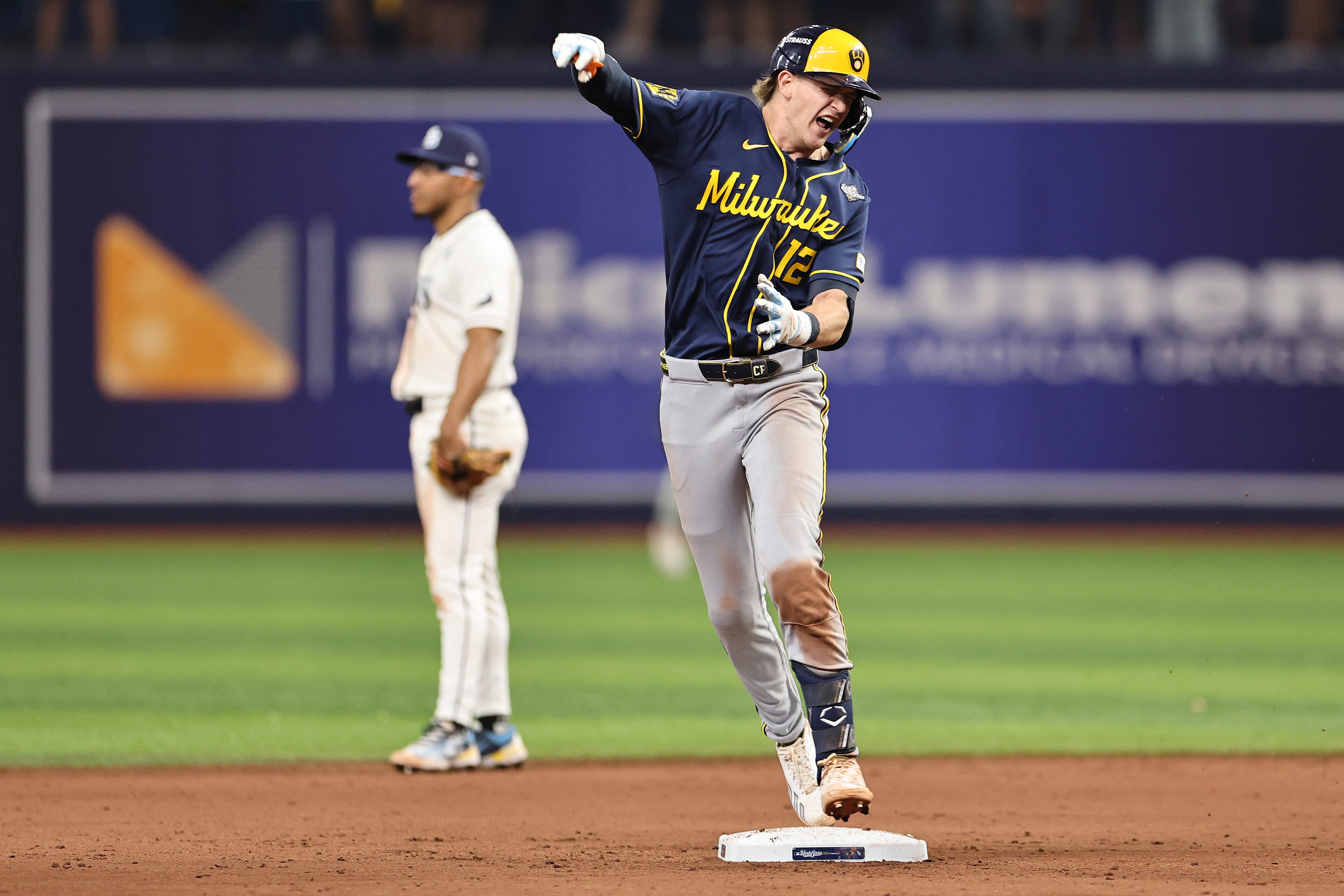
What happens to the Cooper Pratt home runs? Where do they go in the moments after they disappear? Do they just fade to black, like the final scene of a movie? Or do they gather in a ballpark somewhere, far from memory and Cooperstown, where they lament their fates and comfort each other?
“I would have been the most famous home run in the world,” Cooper Pratt’s Homer says sadly as she materializes in a dreamy void that vaguely resembles the left-field stands at Tropicana Field. “I would have been more famous than …”
And she hears a voice.
“We all feel sorry for ourselves at first, kid,” the voice says.
Cooper Pratt’s Homer looks up and realizes that she’s not at Tropicana Field at all.
This looks much more like the right-field stands at old Forbes Field.
“What do you even know about it?” Cooper Pratt’s Homer says.
“Well, a lot, actually,” the voice says. “I’ve been here since 1960.”
And then the voice says, “I’m Yogi Berra’s Homer from Game 7 of the 1960 World Series. I put the Yankees up 5-4 in the sixth inning.”
“Oh, I’m sorry, did the Yankees not win that game?” Cooper Pratt’s Homer asks.
“Everybody thought I was going foul,” Yogi Berra’s Homer continues. “The announcer called me foul. But I was fair all the way. Yogi hit me, and even midair I knew I was destined for greatness. I knew that every kid in America would rush outside the next day and hit balls over backyard fences and pretend that they were hitting me.”
Cooper Pratt’s Homer listens and feels the Yogi Homer’s pain.
“Instead,” Yogi Berra’s Homer says softly. “They all pretended to be Mazeroski.”
And there is silence for a long while.
“All due respect, I think I’m different,” Cooper Pratt’s Homer finally says. “Didn’t the Yankees win, like, lots of World Series? How many times did they win the World Series in the 1950s?”
“Six,” Yogi Berra’s Homer says. “And then they won the two years after me.”
“Right,” Cooper Pratt’s Homer says. “I am something else. I am the first. I was about to give the Milwaukee Brewers their first World Series title ever. When I flew out, everybody in Wisconsin, everybody, stood and cheered and cried. They loaded the clubhouse with champagne. Can you even imagine what I would have meant?”
“I can imagine it,” another voice says.
Cooper Pratt’s Homer turns her head again and sees that this is not at Forbes Field at all. No, this old Shea Stadium. The place smells like hot dogs and stale beer. The voice echoes from under the old “Newsday: It’s a Hit” sign in left field.
“Do you know what Vin Scully said about me after I left the yard and then cheekily bounced back onto the field of play?” Dave Henderson’s Homer from Game 6 of the 1986 World Series asks. “He said, ‘Henderson has done it again!’ Yes, again! My sister was the home run that Dave hit off Donnie Moore in the American League Championship Series. People still remember her.
“But I was going to be much more famous. I was going to give the Boston Red Sox their first World Series championship in almost seventy years. I was going to be the story they told in every bar from Lubec to Williamstown, from Southie to Somerville. And then …”
“And then what?” Cooper Pratt’s Homer asks.
But Dave Henderson’s Homer begins sobbing, and he cannot speak.
“Oh, I hate when he gets like that,” a whole different voice says, a gruffer voice, a gravelly voice, and the scene changes again. Now they are in what looks a lot like Dodger Stadium.
“So many of the Homers here are so sensitive,” the voice grumbles. “It isn’t right. We are all home runs! We should be macho! We should be bold! It isn’t our fault that circumstances changed our fate! We are home runs! We are … hey, Hal! Am I right?”
“You are right,” Hal Smith’s 1960 World Series home run says.
“Damn right, I’m right,” the voice continues. “Listen, Cooper, you hold your head up proudly. You are a World Series home run! You are a …”
“I’m sorry,” Cooper Pratt’s Homer says. “But who are you?”
And for the first time, the voice falters.
“Wait,” he says, “you really don’t know who I am?”