


OK, so if you’re looking for a 5,000-or-so word essay about all the changes in baseball this year, how they work, why they’re being put in place and what the hopes and concerns are around them … yeah, I’ve got the story for you.
That’s over at Esquire! Yeah, in my spare time, I’m kind of like an Esquire writer now too. Check out this month’s cover.

Two names on the cover of Esquire — Chris Pine’s and mine.
And you will notice which name is higher. Yeah, that’s right Chris. Maybe you get to be the love interest of Gal Gadot. But I’ll handle the baseball stuff,* thank you very much.**
*Though I did learn reading the story that Chris Pine wanted to be a ballplayer “until I was thirteen and realized my glaring mediocrity.” He must still have some baseball in him because there’s a YouTube video going around of him walking around LAX while holding a baseball. I’ll have to get him a copy of Why We Love Baseball.
**Esquire did not give me one of those leather jackets for writing the story. Boo!
There’s more than enough to chew on over there so I will not add much … but I will say this: I unequivocally love most of the changes. Love them. I’ve got mixed feelings about the zombie runner, but as for the pitch clock, the larger bases and banning the shift? I’m all in. I love the way they look in the early going, and I cannot wait to see how they will impact games.
I say that even though I feel like I’ve always been pretty skeptical about change in baseball. I lean traditionalist. I didn’t like when they instituted interleague play, didn’t like the addition of the wild card, haven’t liked any of the playoff expansions, I wasn’t even crazy about it when they changed the intentional walk so that pitchers didn’t have to throw the four pitches. I’ve come to accept all of these because I think most people want them, and I want baseball fans to be happy.
But these changes have me really excited for the season. So excited. I realize that not everyone agrees with me — maybe we could have a point-counterpoint with our good friend Joe Sheehan, who doesn’t seem particularly happy about any of the changes. That could be fun.
For now, I’ll just tell you: I absolutely love the pitch clock. I’m watching spring training baseball games that are moving, there’s energy, there’s life, I mean, have you SEEN this?

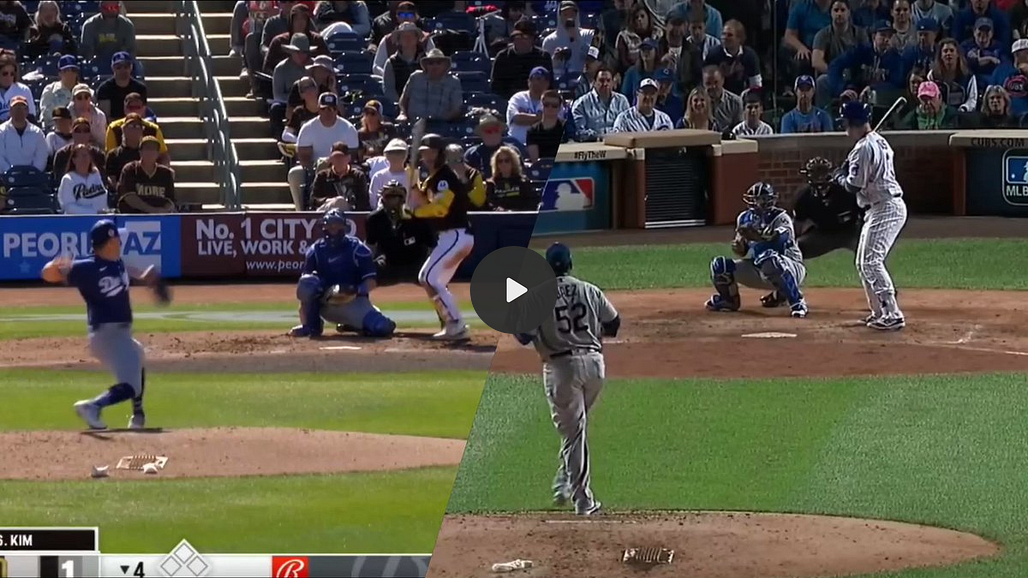
Or this?
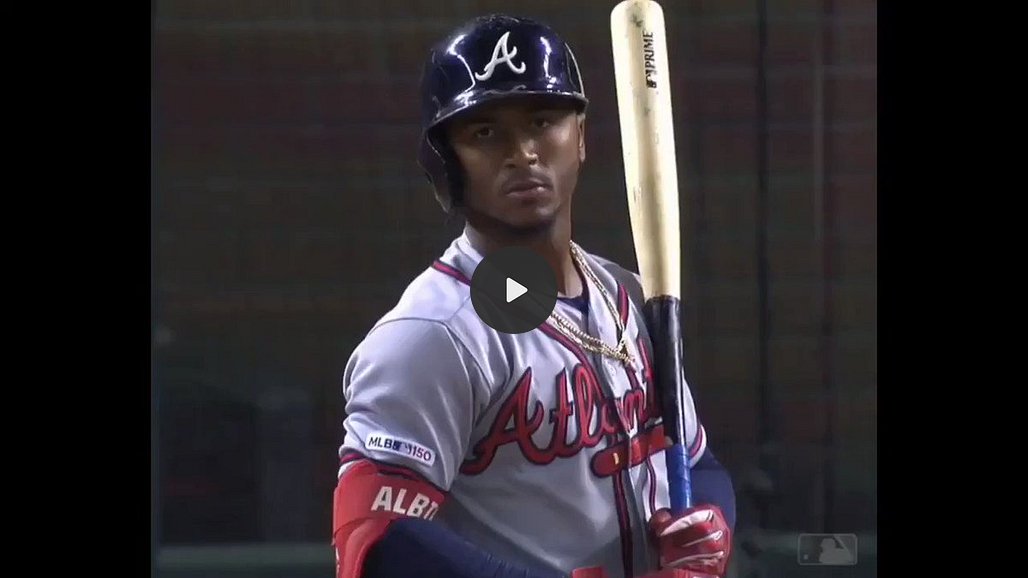
You tell me: Who in the heck wants to go back to the old way? I am not saying that I’m the biggest baseball fan in the world, but I’m probably somewhere in the photograph, and that Baéz and Greinke stuff is UNWATCHABLE, even to me. Everybody — the players, the umpires, the managers, the executives, even us fans — let baseball get away from us. At least the Baéz thing happened in the playoffs, I guess, but the Greinke game is a bleeping Atlanta-Arizona game that didn’t matter at all.
Baseball HAD to fight back. It was getting beyond ridiculous.
Now, I’ve heard people say things like, “OK, I’m fine with a pitch clock, but it’s too short — they need more than 15 seconds (with no one on bases) and 20 seconds (with runners on base), especially in crucial late-inning situations, especially in the playoffs.”
Here’s my thought on that: No, they don’t.
These are the greatest baseball players on earth. They can adjust to any situation you give them. The problem in my mind has been exactly this kind of thinking: Players should not decide how much time they get. Football players don’t get to decide how much time they get to run a play. Basketball players don’t get to decide how much time they get to take a shot. Tennis players don’t get to decide how much time they get to serve. And as much respect and admiration and regard I have for baseball players, the game isn’t supposed to be catered to them.
The game is supposed to be catered to THE FANS. The people paying to attend. The people watching and listening. The people who buy the merch. The people who stay loyal to their teams and connect with other fans and draw joy from baseball. They — we — are the ones who should matter when it comes to how much dead time is in baseball. The league has given us no say on the matter for decades — they just allowed the game to stretch and stretch and stretch on.
I’ve heard people say things like, “Well, I don’t care how long the games go, I love baseball. I don’t need it shortened.” And I get it but (A) You are probably not the typical fan; (B) You are definitely not a prospective fan and (C) You’re probably kidding yourself. Baseball has gained an average of more than a half hour of dead time in the last 40 or so years. Maybe you can live with that, maybe you even think it adds to the drama, but would you feel the same way if there was ANOTHER 15 minutes of dead time in the next decade? What about another half hour of dead time? What about another hour of dead time?
You see where this is going? As Raul Ibañez told me for the Esquire story, players will always take as much time as you give them. Of course they will. If the NFL changed the play clock to 50 seconds or 60 seconds, teams would find use for every one of them.
And, conversely, if the NFL changed the play clock to 30 seconds or 20 seconds, teams would adjust to that too.
One final thing I’d say about the clock: I’ve heard people talk about how terrible it would be if a World Series game ended with an automatic ball or strike because the hitter or pitcher took too long between pitches. I agree, it would be terrible. But it wouldn’t be any more terrible than if an NFL team lost the Super Bowl because of a delay of game penalty or an NBA team lost the Finals over a shot clock violation.
Everybody knows the rule. Look, now, during spring training, hey, it doesn’t matter, violations happen, whatever. But by the All-Star game — and certainly by playoff time — everyone will be used to this, everybody will have an inner clock that matches up with the pitch clock. It would stink for a game to end on a clock violation, but if it happens, I wouldn’t blame the clock. I’d blame the player. Baseball was never meant to be a bunch of guys standing around staring at each other. Baseball was meant to move.
And my view is: It’s so good to see it moving again.

Last thing: I really, really hope this lowers the effectiveness of relief pitchers. Apparently the effects weren't visible in minor league play, but studies have shown that every extra second between pitches raises velocity. And I'd imagine that the cumulative effect is even greater. If a typical 20-pitch relief outing goes from (say) 600 seconds to 360, that should vastly decrease the effectiveness of these generic 1 1/2 pitch righties whose only real ability is grip it and rip it—after 30 seconds to recover from the last one.
Joe, that's a great cover photo of you. I bet Margo gets it framed.